History of Medical Illustration: From Vesalius to the Digital Age

The history of medical illustration traces the evolution of anatomical visualization from Galenic anatomical texts and hand-copied manuscripts to Andreas Vesalius’s 1543 De humani corporis fabrica, Max Brödel’s carbon dust technique, and today’s DICOM-driven 3D rendering. Each stage replaced inference with direct observation, which shifted anatomy education from textual authority to reproducible, evidence-based imagery. Modern[…]


informed-consent-illustration

Informed Consent Illustration: Visuals for Patient Clarity

Informed consent illustration is the use of accurate, procedure-specific medical visuals (anatomical diagrams, stepwise procedural sequences, risk and benefit graphics, and 3D renders) embedded in consent materials to raise patient comprehension, recall, and shared decision-making quality beyond what text-only forms achieve. By pairing plain-language disclosure with dual-coded visual explanation, informed consent illustration reduces cognitive load,[…]

health-literacy-visual-storytelling-gap

Patient Health Literacy Illustration: Complete Guide

Patient health literacy illustration converts dense clinical language into visual formats the brain processes in milliseconds, not minutes. It reduces cognitive load by pairing text with anatomically accurate imagery, which is why illustrated materials consistently outperform text-only handouts in comprehension and recall studies. For hospitals, clinics, pharmaceutical brands, and medical publishers, this single shift in[…]

clinical-image

What Is Clinical Illustration? Uses in Hospitals, Clinics and Medical Education

Clinical illustration is the discipline of translating anatomy, pathology and procedural steps into scientifically accurate visual images used across healthcare settings. Hospitals rely on clinical medical illustration services for informed-consent materials, surgical planning graphics and patient-facing signage, while clinics and medical schools use the same illustrations for patient education handouts, curriculum diagrams and exam-ready reference[…]

minimally-invasive-surgery-illustration-discipline-trocar-placement-workflow

Minimally Invasive Surgery Illustration: Laparoscopic and Robotic Procedure Diagrams

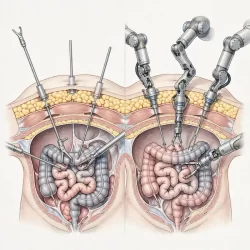
Minimally invasive surgery illustration is the discipline of translating laparoscopic and robotic surgical workflows – trocar placement, instrument articulation, and internal anatomical access – into medically accurate visual diagrams. These illustrations serve surgeons, medical publishers, device manufacturers, and patients who need to understand procedures that occur through small incisions and are otherwise invisible to the[…]

types-medical-illustrations-patient-education

Medical Illustration for Patient Education: Turning Complex Diagnoses Into Clear Visuals

Medical illustration for patient education is the use of scientifically accurate, easy-to-understand visuals to explain complex medical conditions, anatomy, treatments, procedures, and healthcare information to patients. Instead of relying only on complicated medical terminology, these illustrations use clear diagrams, labeled anatomy, step-by-step visuals, and simplified explanations to help patients understand what is happening inside their[…]

featured-human-anatomy-diagram

Human Anatomy Illustration: A Comprehensive Guide for Medical Professionals

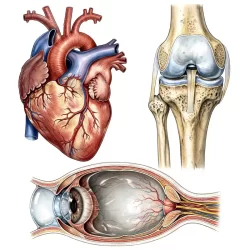
Human anatomy illustration is the specialized discipline of creating scientifically accurate visual representations of the human body’s structural organization, from macroscopic organ systems to microscopic cellular architectures. Medical professionals, educators, and publishers rely on these precise visual assets to communicate complex physiological concepts, support diagnostic reasoning, and enhance patient comprehension across clinical and academic settings.[…]

microbiome-gut-phage

Biotechnology Illustration: What It Is and Why It Matters?

Biotechnology illustration is a specialized discipline of scientific visual communication that produces molecularly precise, biologically accurate graphic representations of living systems, genetic processes, cellular mechanisms, biomanufacturing workflows, and therapeutic modalities – spanning gene editing, cell therapy, mRNA technology, antibody engineering, and synthetic biology – for use across biotech R&D documentation, investor presentations, regulatory submissions, scientific[…]

molecular-infographic-pastel

Pharmaceutical Illustration for Communicating Drug Mechanisms Visually

Pharmaceutical illustration is a specialized branch of biomedical visual communication that produces scientifically accurate, graphically precise static or sequential visual representations of drug mechanisms, molecular pharmacology, biological pathways, drug delivery systems, and dosage form interactions – created specifically for use across pharmaceutical marketing, clinical education, regulatory documentation, scientific publishing, and investor communication. At the molecular[…]

medical-device-illustration

Medical Device Illustration: What It Is and Why It Matters for MedTech Companies

Medical device illustration is a specialized discipline of biomedical visualization that produces scientifically accurate, technically detailed graphic representations of medical hardware – including implants, surgical instruments, diagnostic equipment, combination products, and delivery systems – for use across regulatory submissions, marketing collateral, training documentation, and clinical communication. A professionally executed medical device illustration translates complex three-dimensional[…]