
Clinical illustration is the discipline of translating anatomy, pathology and procedural steps into scientifically accurate visual images used across healthcare settings. Hospitals rely on clinical medical illustration services for informed-consent materials, surgical planning graphics and patient-facing signage, while clinics and medical schools use the same illustrations for patient education handouts, curriculum diagrams and exam-ready reference charts. The discipline sits at the intersection of fine art, biomedical science and instructional design, and it is produced by trained medical illustrators rather than general graphic designers.
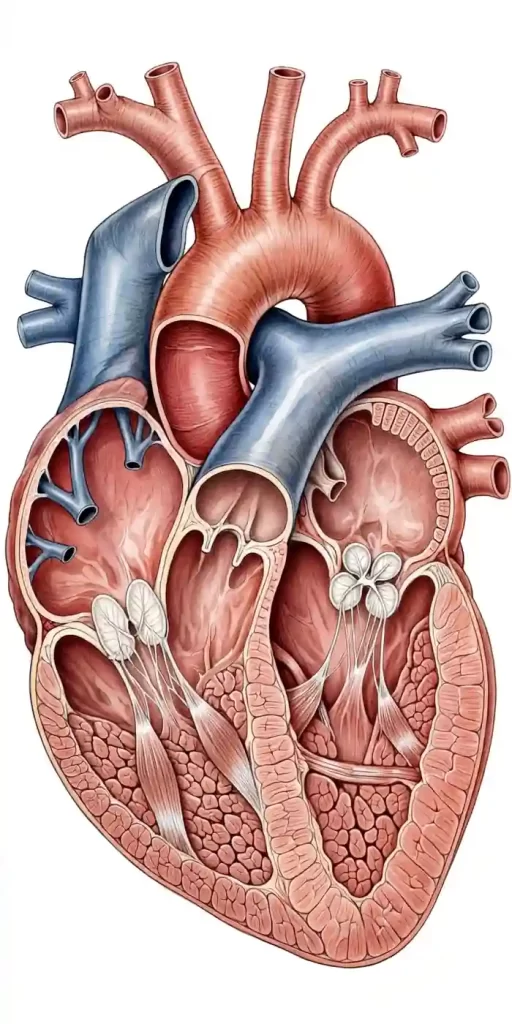
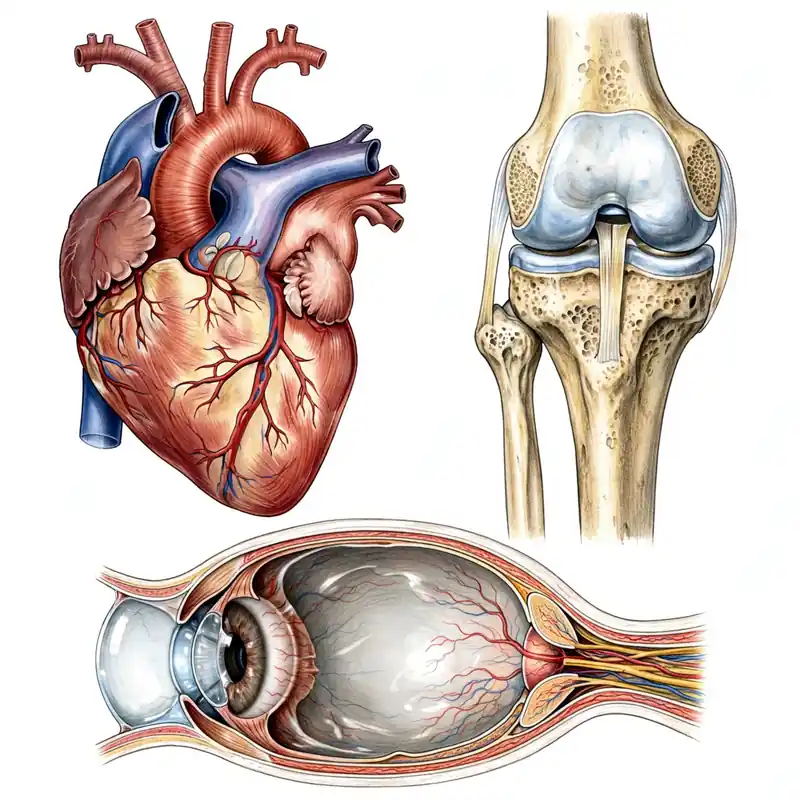
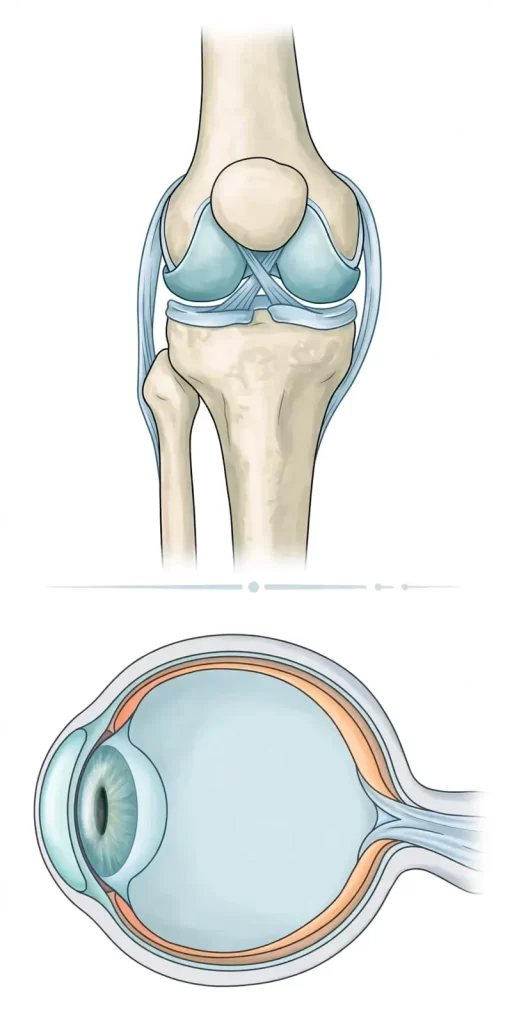
If you have ever looked at a diagram of the heart’s chambers on a cardiologist’s wall, flipped through a patient education brochure explaining a knee replacement, or studied a cross-section of the human eye in a textbook, you have seen clinical illustration at work. It is one of the oldest forms of scientific communication, yet it remains indispensable in an era of MRI scans, 3D printing and augmented reality. That is because raw medical imagery – an actual photograph of an open surgical field, for instance – is often too graphic, too cluttered, or too specific to a single patient to be useful for teaching or informing a general audience. A well-crafted illustration, on the other hand, can isolate exactly the structures that matter, strip away distracting detail, and present a procedure or condition in a way that a frightened patient, a first-year medical student, or a busy surgeon can understand in seconds.
At The Medical Illustration Company, this is the core of what we do: producing clinically accurate, publication-ready visuals for hospitals, clinics, device manufacturers and academic institutions. This guide breaks down what clinical illustration actually is, how it differs from related fields like medical animation, and where it delivers the most value across the healthcare journey – from the hospital operating room to the clinic waiting area to the medical school lecture hall.
What is Clinical Illustration, Exactly?
Clinical illustration refers to visual artwork that depicts human anatomy, physiology, disease processes or medical procedures with a level of scientific precision that meets the standards of clinicians, researchers and educators. Unlike general medical illustration, which can include broader scientific or biotech subject matter, clinical illustration is specifically oriented around patient care contexts: diagnosis, treatment, surgery, recovery and education.
A useful way to think about it: clinical illustration is the visual language that sits between raw medical data (scans, lab results, surgical photography) and human understanding. It converts complexity into clarity without sacrificing accuracy.

Core Characteristics of Clinical Illustration
- Anatomically accurate – every structure is drawn to reflect true proportions, spatial relationships and biological detail, usually cross-referenced against cadaver studies, imaging data or anatomical atlases.
- Purpose-built for a specific audience – the same procedure may be illustrated very differently for a patient consent form versus a surgical training manual.
- Created by trained specialists – most professional clinical illustrators hold a graduate degree in medical illustration (often an MS in Biomedical Visualization or Medical Illustration) combined with coursework in gross anatomy, histology and pathology.
- Reviewed for clinical accuracy – reputable studios route illustrations through a clinician or subject-matter expert before final delivery.
- Format-flexible – clinical illustrations can be produced as 2D line art, full-color renders, 3D models, or interactive digital assets depending on the use case.
A Brief History: Why Clinical Illustration Still Matters in 2026
Clinical illustration predates modern medicine itself. Andreas Vesalius’s De Humani Corporis Fabrica (1543) is widely credited as the foundation of the field, pairing detailed dissection-based drawings with anatomical text in a way that transformed medical education. Frank H. Netter’s Atlas of Human Anatomy, first published in the 20th century, remains one of the best-selling medical reference works in history and is still used in medical schools today.
You might assume that CT scans, MRI, and 3D anatomical software have made hand-crafted illustration obsolete. In practice, the opposite has happened. Diagnostic imaging shows what is present in a specific patient; illustration shows what is typical, idealized, or instructional, which is precisely what is needed for teaching, consent and communication. A scan is data. An illustration is a lesson.
Types of Clinical Illustration
Not all clinical illustration looks the same. The right style depends on the audience and the goal.
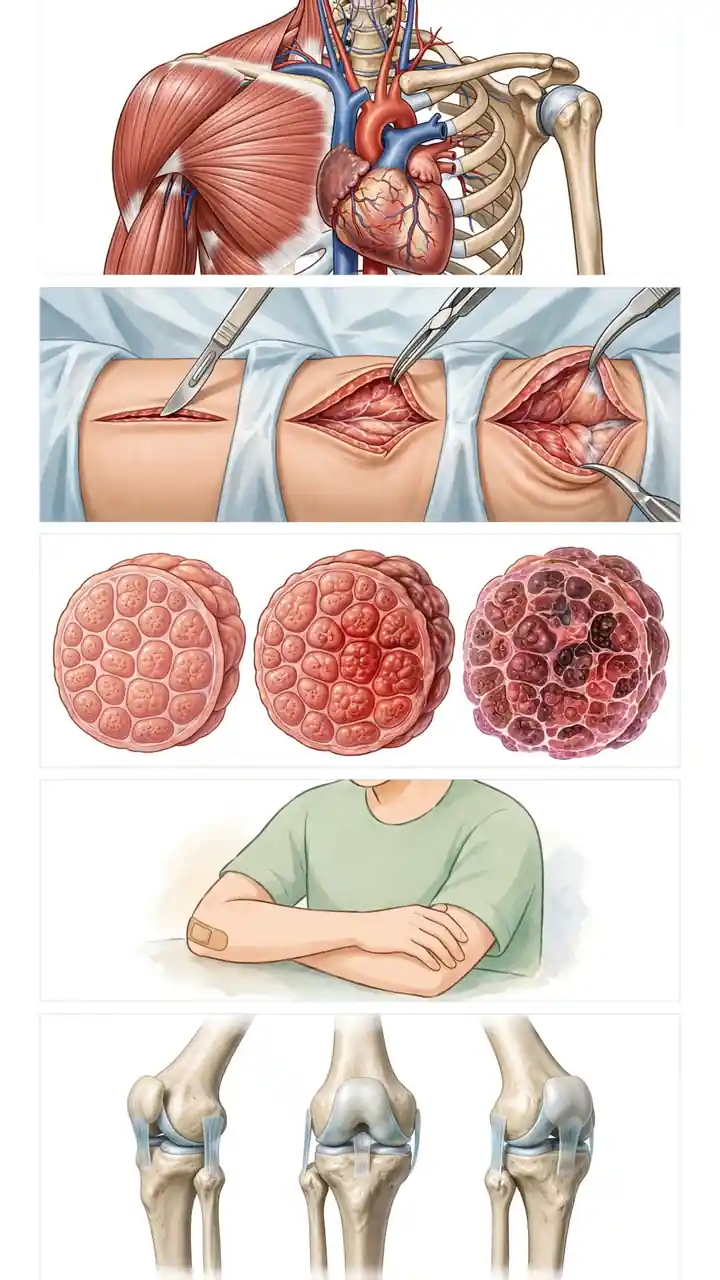
1. Anatomical Illustration
Detailed depictions of body systems – musculoskeletal, cardiovascular, nervous, digestive – used in textbooks, exam prep materials and clinic signage. These are often the closest to the traditional “atlas” style.
2. Surgical and Procedural Illustration
Step-by-step visual breakdowns of a procedure, from incision placement to instrument positioning to closure. These are heavily used in informed-consent documents and surgeon training materials, and they frequently accompany our guide on minimally invasive surgery illustration for laparoscopic and robotic workflows specifically.
3. Pathological Illustration
Visuals showing disease progression, abnormal tissue, or the mechanism of a condition – useful for explaining diagnoses to patients or illustrating disease pathways in research and pharma materials.
4. Patient Education Illustration
Simplified, non-intimidating visuals designed for a lay audience, often paired with plain-language captions. These form the backbone of clinic handouts and discharge instructions, a topic covered in depth in our piece on medical illustration for patient education.
5. 3D Clinical Illustration
Rendered or modeled visuals that allow rotation, cross-sectioning, or layered viewing – increasingly common in device marketing, surgical planning and interactive e-learning modules. We go into more depth on this format in what is 3D medical illustration.
Clinical Illustration in Hospitals
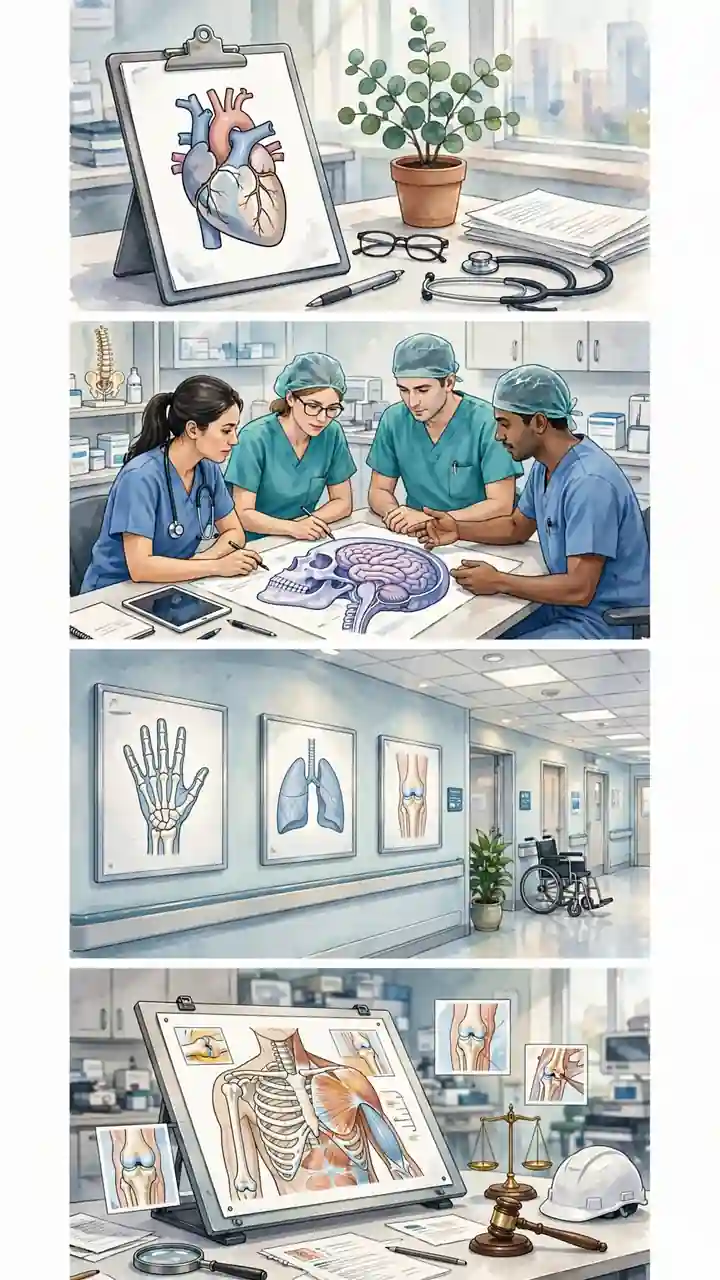
Hospitals operate under constant pressure: patients need to understand risk quickly, staff need training materials that hold up under scrutiny, and legal departments need documentation that is both accurate and defensible. Clinical illustration touches nearly every one of these workflows.
Informed Consent Documentation
Before most surgeries, a patient signs an informed consent form. Increasingly, hospitals attach a simplified illustration alongside the written explanation, because visuals dramatically improve comprehension and retention compared to text alone. A clear diagram of “here is where the incision will be, here is what will be removed, here is what will remain” reduces patient anxiety and reduces the hospital’s liability exposure by demonstrating that the risks were communicated clearly.
Surgical Planning and Communication
Surgeons frequently use custom illustrations – built from a specific patient’s imaging data – to plan complex procedures and communicate the approach to the rest of the surgical team. This is especially common in reconstructive, orthopedic and neurosurgical cases, where spatial orientation is critical.
Wayfinding and Departmental Signage
Anatomical illustrations appear throughout hospital corridors, in radiology departments, cardiac units and maternity wards, helping both patients and new staff orient themselves to what a given department treats.
Risk Management and Litigation Support
When a malpractice claim involves a surgical or anatomical dispute, hospitals and legal teams commission forensic-grade clinical illustrations to reconstruct what occurred during a procedure. These illustrations must be defensible under expert scrutiny, which is why accuracy review is non-negotiable in this context.
Clinical Illustration in Clinics
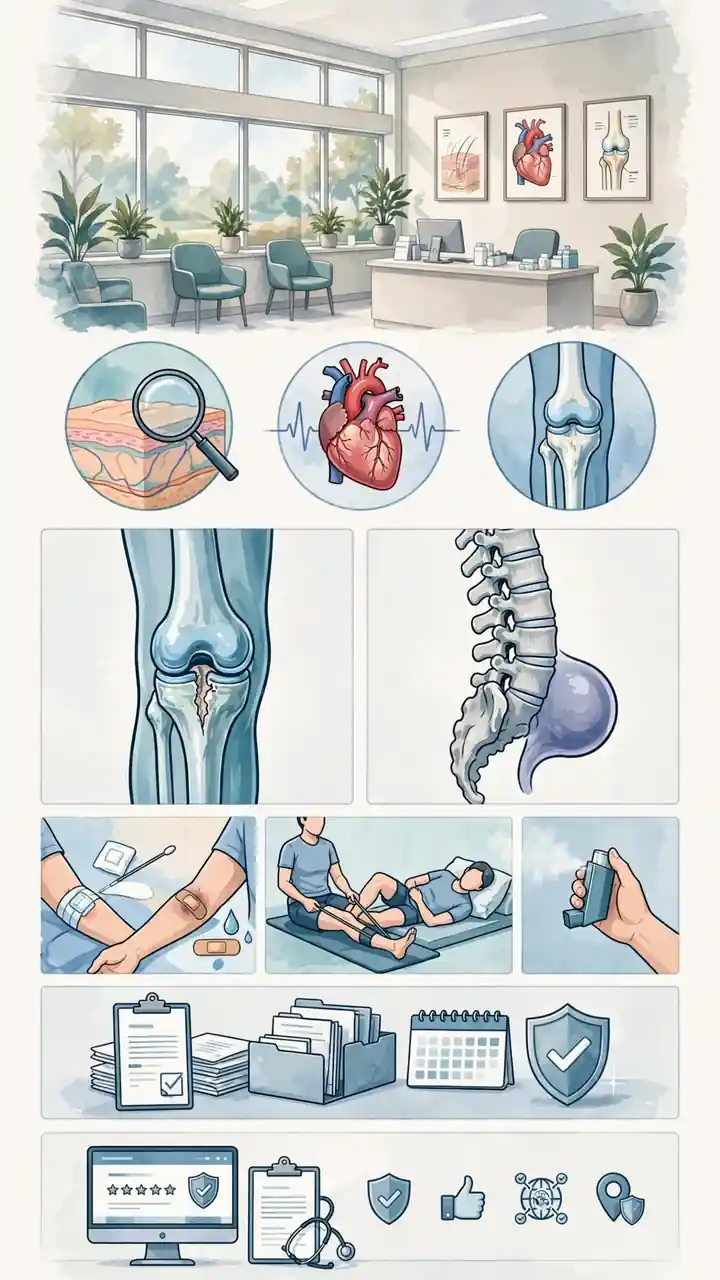
Outpatient clinics – dermatology, orthopedics, cardiology, OB-GYN, dental and beyond – lean on clinical illustration daily, often without patients even registering it as “illustration.”
Patient Education Handouts
A printed or digital handout explaining a diagnosis (say, a torn meniscus or a herniated disc) is far more effective with an accompanying illustration than with text alone. It helps patients retain information after they leave the appointment, which in turn improves treatment adherence.
Pre- and Post-Procedure Instructions
Illustrated guides showing wound care, physical therapy positioning, or medication administration (like how to use an inhaler correctly) reduce the number of follow-up calls a clinic receives and improve outcomes.
Website and Marketing Content
Clinics increasingly use clinical illustration on their own websites and blogs to explain conditions and procedures to prospective patients researching treatment options online – functioning as both an SEO asset and a trust signal.
Insurance and Billing Documentation
Some procedures require visual documentation to justify medical necessity to insurers; a clear illustration can support this process more efficiently than photographs alone.
Clinical Illustration in Medical Education
Medical schools, nursing programs, physician assistant programs and allied health training all depend heavily on clinical illustration – arguably more than any other sector.
Textbooks and Study Atlases
From gross anatomy to pathology to pharmacology, illustrated atlases remain a primary study tool because they let students isolate one structure or process at a time, something a cadaver or a photograph often cannot do cleanly.
Lecture Slides and Course Materials
Faculty commission custom illustrations to match their specific curriculum, ensuring a diagram aligns exactly with how a concept is taught rather than relying on a generic stock image that may use different labeling conventions.
Board Exam Preparation
Visual mnemonics and simplified diagrams are widely used in board exam prep because they compress dense material into a format that is easier to recall under test conditions.
Journal Publication and Peer Review
Researchers submitting to medical and scientific journals are frequently required to include original illustrations rather than borrowed images, both for copyright reasons and for clarity. Our author guidelines for illustrations in medical and scientific journals covers exactly what journals expect from submitted artwork.

Clinical Illustration vs. Medical Animation vs. Medical Photography
These three disciplines are often confused, but they serve different purposes.
| Format | Best For | Strengths | Limitations |
|---|---|---|---|
| Clinical Illustration | Consent forms, textbooks, patient handouts, journal figures | Precise, static, easy to annotate and print, low production cost | Cannot show motion or time-based processes |
| Medical Animation | Surgical training videos, device marketing, e-learning | Shows sequence and motion, highly engaging | Higher cost, longer production timeline |
| Medical Photography | Case documentation, dermatology records, before/after comparisons | Real, patient-specific, fast to capture | Graphic, subject to privacy concerns, cannot simplify or generalize |
For a deeper comparison of the first two, see our breakdown of the difference between medical illustration and medical animation.
When to Choose Clinical Illustration Over Animation
- The material needs to be printed (consent forms, handouts, textbooks)
- Budget or timeline does not support animation production
- The concept is a single moment or state rather than a process over time
- The output needs to be easily annotated, labeled or edited by clinical staff
The Clinical Illustration Production Process

Producing an accurate clinical illustration is not a single design step – it is closer to a mini research project. Here is how a professional studio typically approaches it.
- Reference Gathering – the illustrator collects anatomical references, imaging data (CT/MRI where relevant), existing literature and, where possible, direct input from a clinician.
- Rough Concept Sketch – a low-fidelity draft establishes composition, viewpoint and the structures that will be included or omitted.
- Clinical Accuracy Review – a subject-matter expert or the commissioning physician reviews the rough sketch for anatomical correctness before detailed rendering begins.
- Detailed Rendering – the illustrator builds out shading, color, labeling and texture, whether in a traditional 2D vector style or a fully rendered 3D format.
- Labeling and Typography Pass – anatomical labels, leader lines and captions are added in a style consistent with the client’s existing materials.
- Final Clinical Sign-Off – a final review confirms the illustration is publication-ready and free of inaccuracies.
- Delivery in Multiple Formats – print-ready PDF/EPS, web-optimized PNG/SVG, and source files are typically all delivered together.
Common Mistakes to Avoid When Commissioning Clinical Illustration

- Skipping clinical review. An illustration that looks polished but has not been checked by a clinician can introduce anatomical errors that undermine trust – or create legal exposure in consent documentation.
- Using generic stock anatomy. Stock illustrations rarely match a specific procedure, patient population or labeling convention, which can confuse rather than clarify.
- Overcomplicating patient-facing visuals. A diagram meant for a nervous patient should not look like a surgical atlas; simplification is a skill, not a shortcut.
- Ignoring accessibility and readability. Color choices that fail for colorblind viewers, or labels that are too small to read when printed, undercut an otherwise strong illustration.
- Treating illustration as a one-time purchase. Anatomy references, terminology and even surgical techniques evolve; illustrations tied to outdated methods should be revisited periodically.
Expert Tips for Getting the Most Out of Clinical Illustration Services

- Provide the illustrator with any existing brand or style guide upfront so new illustrations match your current materials.
- Share the specific audience (patient, student, peer reviewer) before work begins – this single detail shapes almost every design decision that follows.
- Where possible, involve the treating clinician in the reference and review stage rather than only at final sign-off.
- Request source files, not just flattened images, so future edits do not require starting from scratch.
- For recurring needs (a hospital department, a clinic chain, a course curriculum), consider a retainer relationship with one illustration team to keep visual style and labeling conventions consistent over time.
Emerging Trends Shaping Clinical Illustration in 2026
Clinical illustration is not standing still. A handful of shifts are changing how hospitals, clinics and academic institutions commission and use this work.
Interactive and Layered Digital Illustration
Static PDFs are increasingly being supplemented with layered digital illustrations that let a viewer toggle between skin, muscle, skeletal and vascular views of the same region. This is especially valuable in e-learning platforms and patient portals, where a single illustration can now serve several educational purposes instead of requiring a separate asset for each layer.
Patient-Personalized Visual Summaries
Some hospital systems are beginning to pair standard illustrated templates with a patient’s own imaging data, producing a semi-customized visual summary of their specific diagnosis rather than a fully generic one. This bridges the gap between a purely generic educational illustration and a full custom rendering built from scratch.
AI-Assisted Drafting, Human-Led Accuracy Review
AI tools are increasingly used to speed up early-stage drafting – rough compositions, color studies, or layout exploration – but clinical accuracy review still rests firmly with trained medical illustrators and clinicians. Given Google’s continued emphasis on first-hand expertise and people-first content in healthcare-adjacent publishing, studios that skip human clinical review are the ones most likely to see quality and trust erode over time.
Multimodal Content Pairing
Rather than choosing between illustration, animation and photography, many institutions are pairing all three within a single patient journey: a static illustration on the consent form, a short animation in the pre-op waiting room, and photography for the post-op record. This “multimodal” approach reflects a broader shift in healthcare content strategy toward meeting patients and learners wherever their attention naturally lands.
Accessibility-First Design
Color-contrast standards, screen-reader-friendly labeling, and multilingual caption sets are becoming standard requirements rather than optional add-ons, particularly for hospital systems serving diverse patient populations. An illustration that cannot be understood by a colorblind viewer or a non-native English speaker has a meaningfully smaller impact than one designed with accessibility in mind from the start.

How Clinical Illustration Supports the Broader Patient Journey

It helps to think of clinical illustration not as a single deliverable but as a thread that runs through nearly every touchpoint of a patient’s experience with a hospital or clinic.
- Before diagnosis: condition-explainer illustrations on a clinic’s website or intake materials help patients understand symptoms and know when to seek care.
- At diagnosis: illustrations paired with a physician’s verbal explanation improve comprehension and reduce the anxiety that comes from unfamiliar medical terminology.
- Before treatment: informed-consent illustrations and pre-procedure instructional graphics set accurate expectations.
- During treatment: surgical planning illustrations align the care team around a shared visual understanding of the approach.
- After treatment: discharge instructions, wound-care diagrams and physical therapy illustrations support recovery and reduce readmission risk.
- Long after treatment: the same illustrations, refreshed periodically, continue to serve as training material for new staff and students long after the original patient’s care has concluded.
This lifecycle view is also why many hospitals, clinics and rendering-focused healthcare marketing teams now treat illustration as an ongoing content investment covered in our broader discussion of why medical illustrations matter, rather than a one-off purchase tied to a single project.
What to Look for When Choosing a Clinical Illustration Partner

Not every design studio is equipped to handle clinical work, and the stakes of getting it wrong – a mislabeled structure on a consent form, an inaccurate surgical diagram – are higher than in most creative fields. When evaluating a potential partner, consider the following.
- Portfolio depth in your specific specialty. A studio experienced in cardiovascular illustration may not automatically be strong in orthopedic or neurosurgical work; ask to see directly relevant samples.
- Clinical review process. Ask specifically how accuracy is verified, by whom, and at what stage in the production timeline.
- Turnaround and revision policy. Clinical projects often involve multiple review rounds with physicians; confirm how revisions are handled and priced.
- Format flexibility. Confirm the studio can deliver both print-ready and web-optimized formats, plus editable source files for future updates.
- Compliance awareness. For patient-facing materials, ask whether the studio has experience with HIPAA-conscious workflows and standard healthcare content review processes.
- Consistency across a growing library. If you anticipate ongoing illustration needs, ask how the studio maintains a consistent visual style and labeling convention across dozens or hundreds of assets over time.
A useful gut-check before signing off on any partner: ask to see one example where the studio caught and corrected an anatomical inaccuracy during the review process. A studio that can point to a concrete example of its own quality control in action is generally a stronger long-term partner than one that only shows finished, error-free portfolio pieces.
Frequently Asked Questions
What is the difference between clinical illustration and general medical illustration?
Clinical illustration is a subset of medical illustration focused specifically on patient care contexts – diagnosis, procedures, consent and patient education – while medical illustration more broadly can also include biotech, pharmaceutical and pure research subject matter.
Who creates clinical medical illustrations?
Professional clinical illustrators typically hold a graduate degree in medical illustration or biomedical visualization, combined with formal training in anatomy, histology and pathology, and their work is usually reviewed by a practicing clinician for accuracy.
Why do hospitals use illustrations instead of real surgical photos for consent forms?
Illustrations can isolate exactly the relevant anatomy without graphic detail, reduce patient anxiety, and are easier to standardize across many patients undergoing the same procedure, whereas surgical photography is patient-specific and often too explicit for general use.
How long does it take to produce a clinical illustration?
Timelines vary by complexity, but a single detailed illustration with clinical review typically takes anywhere from a few days to two to three weeks, while multi-illustration projects or full 3D assets can take longer.
Can clinical illustrations be used in journal publications?
Yes – in fact, many journals prefer or require original illustrations over borrowed images for copyright and clarity reasons, and most professional studios can produce artwork that meets specific journal submission guidelines.
What file formats are typically delivered for clinical illustrations?
Most studios deliver a combination of print-ready formats (PDF, EPS, high-resolution TIFF), web-optimized formats (PNG, SVG) and editable source files so the artwork can be updated later without redrawing it from scratch.
Conclusion
Clinical illustration is not a decorative add-on to healthcare communication – it is functional infrastructure. It shapes whether a patient truly understands the procedure they are consenting to, whether a first-year medical student retains a complex anatomical relationship, and whether a surgical team walks into an operating room with a shared visual understanding of the plan. As medicine continues to grow more specialized, the demand for illustration that is both scientifically airtight and instantly understandable will only increase.

If your hospital, clinic or academic program needs anatomically precise, clinically reviewed illustrations built specifically for your audience, explore our clinical medical illustration services and start a project with our team today.