
When healthcare brands, pharmaceutical companies, or medical educators search for the right visual communication tool, one question comes up repeatedly: what is the difference between medical illustration vs medical animation? Both disciplines transform complex biomedical concepts into clear, compelling visuals – but they work in fundamentally different ways, serve distinct purposes, and require very different budgets and timelines.
Understanding this difference is not merely academic. Choosing the wrong format can cost you time and money, or worse, fail to communicate your message effectively to doctors, patients, investors, or regulators.
In this guide, we break down exactly how medical illustration and medical animation differ across every key dimension: format, use case, cost, production time, and audience impact. Whether you are exploring professional medical illustration services for the first time or are trying to expand from static assets into motion, this resource is built for you.
Quick Definitions: Medical Illustration and Medical Animation
What is Medical Illustration?
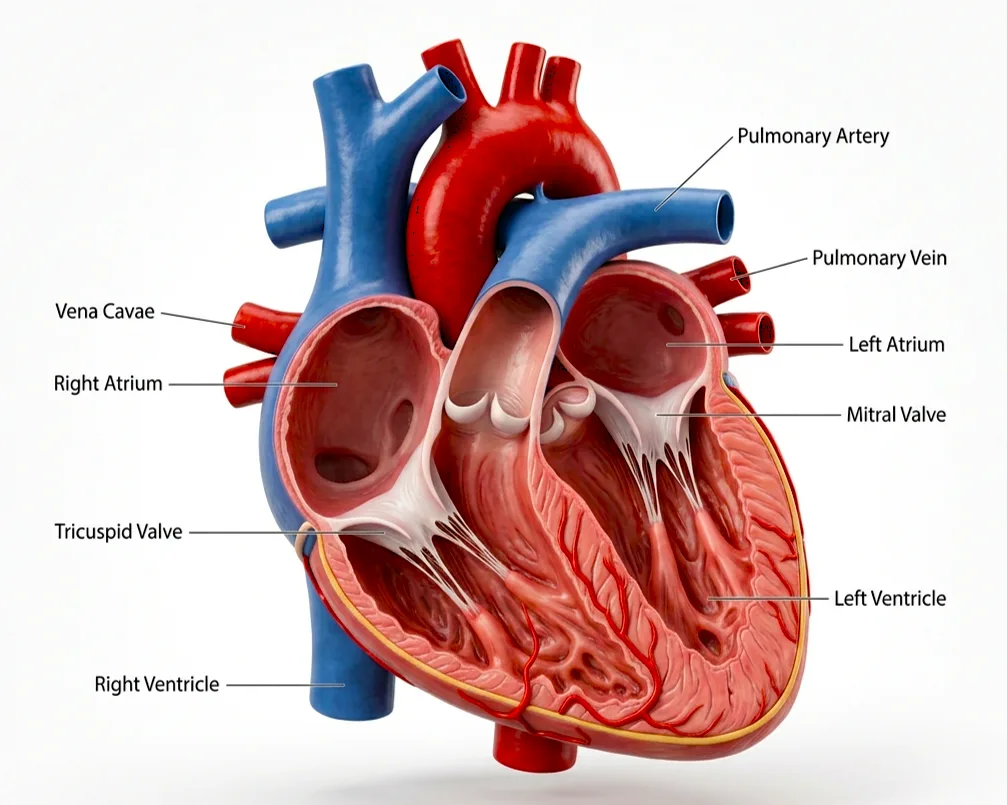
Medical illustration is the creation of static, scientifically accurate visual representations of biological structures, medical devices, surgical procedures, physiological processes, and clinical concepts. These images can be 2D or 3D, rendered digitally or by hand, and produced in a wide range of styles – from photorealistic to schematic. Learn more in our detailed overview: what is medical illustration and why it matters.
Medical illustrators typically hold advanced degrees in biomedical visualization and combine artistic skill with deep scientific knowledge to create images used in textbooks, journal articles, patient education materials, legal exhibits, and more.
What is Medical Animation?
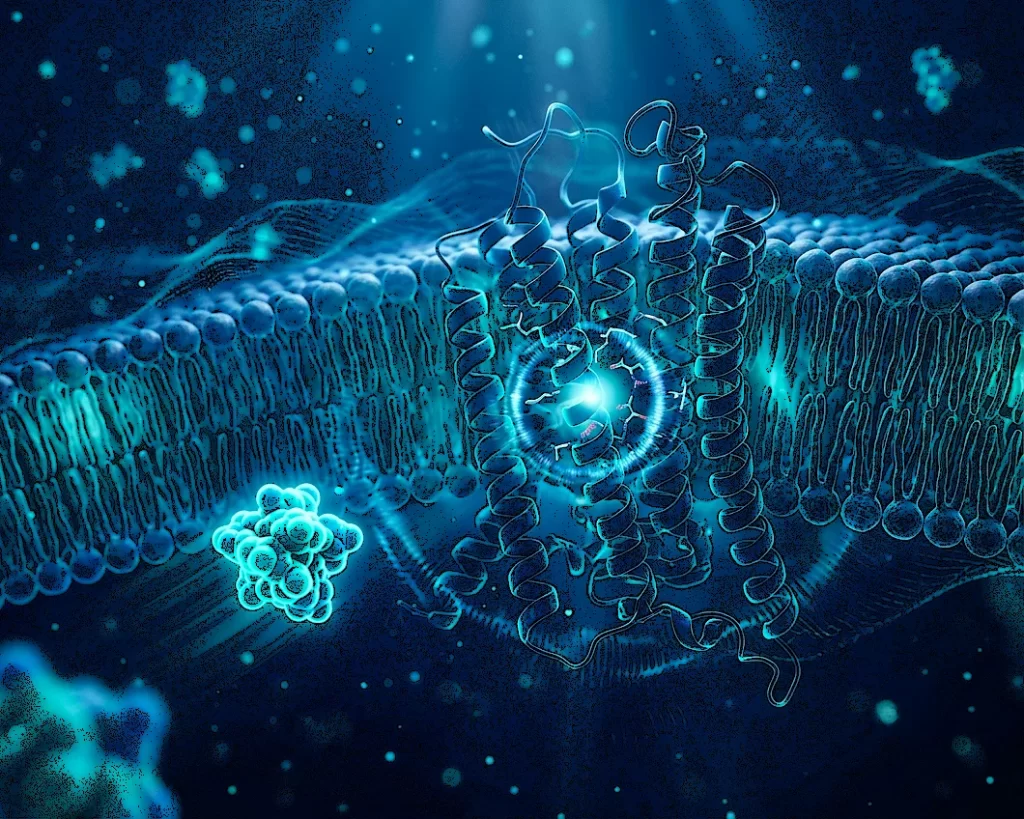
Medical animation refers to time-based, motion-driven visual content that depicts biological, physiological, or medical processes through movement. It extends static illustration into the fourth dimension – time – allowing viewers to watch how a drug molecule binds to a receptor, how a surgical robot navigates tissue, or how a virus replicates inside a host cell.
Medical animators combine skills from illustration, 3D modeling, rigging, cinematography, and storytelling to produce videos, interactive modules, and augmented reality experiences. The output can range from a 30-second patient education clip to a multi-minute mode-of-action (MOA) film for pharmaceutical launch campaigns.
Medical Illustration vs Medical Animation: The Core Differences
While both disciplines share a foundation in science and visual storytelling, they diverge sharply in format, application, production workflow, and return on investment. The table below captures the most important distinctions at a glance.
Comparison Table: Medical Illustration vs Medical Animation
| Aspect | Medical Illustration | Medical Animation |
|---|---|---|
| Format | Static 2D or 3D image | Moving video or interactive sequence |
| Primary Use | Textbooks, journals, training materials | Patient education, surgical training, product demos |
| Production Time | Shorter (days to weeks) | Longer (weeks to months) |
| Cost | Generally lower per asset | Higher due to rigging, rendering, and motion work |
| Software Examples | Adobe Illustrator, Photoshop, ZBrush | Maya, Blender, Cinema 4D, After Effects |
| Detail Depth | Extremely high in static view | High, but constrained by frame rate |
| Viewer Engagement | High for reference; requires study | Very high; digestible without prior training |
| Revision Ease | Simple edits are fast | Changes are time-intensive |
| Best for Complex Motion | Limited (sequence panels used) | Excellent; shows mechanism step-by-step |
1. Format and Output
The most fundamental difference is the output format. Medical illustration produces a finished image file – a JPG, PNG, EPS, PDF, or high-resolution print asset. Medical animation produces video (MP4, MOV) or interactive sequences (HTML5, WebGL, AR/VR).
For publications requiring print-ready assets, static formats are essential. Our overview of medical vector illustration formats including AI and EPS files explains the technical requirements for different publishing workflows.
2. Purpose and Communication Goals
Medical illustration excels at communicating a single, precise moment in time. It freezes complex anatomy or a surgical step so readers can study every detail at their own pace. This is why medical journals, textbooks, and regulatory submissions overwhelmingly prefer static illustrations.
Medical animation, by contrast, is built for dynamic processes where the sequence of events matters as much as the individual components. Showing how an implant deploys, how an antibody targets cancer cells, or how a minimally invasive instrument navigates the body cavity requires motion that a static image simply cannot provide.
3. Audience and Context
Consider who will consume the content and in what environment:
- Clinicians and researchers reading journals expect static, annotated, high-resolution images they can zoom into and reference.
- Patients watching a pre-procedure explainer benefit most from gentle, approachable animation that reduces anxiety and builds understanding.
- Sales representatives demonstrating a medical device at a conference need a memorable animation that communicates value quickly.
- Legal teams presenting a surgical error case in court may prefer the clarity and interpretive control of a static illustration.
- Grant committees reviewing research applications typically receive illustrated figures alongside data, not animation files.
Understanding the context is critical. Our resource on the importance of medical illustrations in healthcare explores how static visuals serve diverse professional audiences.
4. Cost and Production Timeline
Budget and deadline are often the deciding factors for healthcare communicators. Here is what you can generally expect:
Medical Illustration Timeline and Cost:
- Simple 2D anatomical illustration: 2-5 business days
- Complex 3D cutaway or surgical procedure: 1-3 weeks
- Full textbook figure set (multiple panels): 3-6 weeks
- Cost range: lower per asset than animation; accessible for small teams and independent researchers
Medical Animation Timeline and Cost:
- Short explainer (30-60 seconds): 4-6 weeks
- Full MOA video (2-3 minutes): 8-16 weeks
- Interactive 3D module: 3-6 months
- Cost range: substantially higher due to 3D modeling, rigging, motion, audio, and rendering
For teams with tight budgets, illustration often delivers the highest visual impact per dollar – especially for print, digital publishing, and compliance documentation. Animation delivers unmatched ROI for patient education, device demonstrations, and marketing campaigns where engagement is the primary KPI.
5. Tools and Software
Medical illustrators work primarily with 2D vector tools like Adobe Illustrator and raster tools like Adobe Photoshop, alongside 3D sculpting applications such as ZBrush, Modo, and Cinema 4D for rendering. Our guide on software used in 3D medical illustration covers the professional toolkit in depth.
Medical animators use much of the same 3D modeling software but add animation-specific tools: rigging systems (for skeletal movement), particle simulators (for fluid or cellular behavior), lighting and camera rigs, compositing software like Adobe After Effects, and render farm resources for high-resolution output. The post-production pipeline for animation – including audio narration, sound design, and closed captioning – adds additional time and specialist cost.
When to Choose Medical Illustration vs Medical Animation
The decision between the two formats rarely comes down to a single factor. Instead, it involves weighing your communication goal, your audience, your distribution channel, and your budget. Use the decision matrix below as a starting point.
Table 2: Use Case Decision Guide – Medical Illustration vs Medical Animation
| Use Case / Industry | Medical Illustration | Medical Animation |
|---|---|---|
| Medical Textbooks & Journals | Ideal | Rarely used |
| Patient Education Brochures | Common | Increasingly used |
| Surgical Training Materials | Common (step panels) | Excellent (3D walkthroughs) |
| Pharmaceutical Marketing | Strong choice | Very popular |
| Medical Device Instructions | Standard | Growing adoption |
| Grant Applications / Research | Preferred | Occasionally used |
| Explainer Videos / Social Media | Used as stills | Highly effective |
| Courtroom / Legal Exhibits | Preferred | Sometimes used |
| e-Learning Modules | Common | Ideal for engagement |
Choose Medical Illustration When:
- Your deliverable is a journal article, textbook chapter, or regulatory submission
- Your audience is trained medical professionals who will study the image closely
- Your timeline is short or your budget is limited
- You need reproducible, editable vector assets for multiple formats
- You are building training materials for internal clinical education
- The visual depicts a complex anatomical structure best understood in a single, detailed view
Illustration also works extremely well within medical training and instructional videos as interstitial frames or supporting reference panels alongside motion content.
Choose Medical Animation When:
- Your goal is to show a process that unfolds over time (drug delivery, cell division, device deployment)
- Your audience is non-medical: patients, caregivers, investors, or the general public
- Your distribution channel is video (website, YouTube, trade show, app)
- You need to maximize retention and emotional engagement
- Your product launch requires a showpiece asset for media and marketing
- You are developing an e-learning or simulation module
The Hybrid Approach: Combining Illustration and Animation
In practice, many of the most effective medical communication campaigns use both formats in a complementary strategy. A pharmaceutical company launching a new biologic, for instance, might commission:
- A library of static 3D illustrations for the prescribing information and journal advertising campaign
- An animated MOA video for the product website and sales team presentations
- Illustrated step-by-step panels for the healthcare professional training manual
- Short motion clips extracted from the animation for social media use
This layered approach ensures that each audience segment – clinicians, patients, sales teams, and media – receives content optimized for their specific context and attention mode. It also creates economies of scale: assets from the illustration phase often feed directly into the animation pipeline, reducing rework.
Who Creates Medical Illustrations and Medical Animations?
Both disciplines require highly specialized professionals who bridge science and art. Professionals in both fields typically hold graduate degrees in biomedical visualization, medical illustration, or a related STEM-arts discipline. Learn more about the skills and responsibilities that define a medical illustrator’s role.
Medical illustrators specialize in anatomical accuracy, compositional clarity, and the production of print-ready or publication-ready static assets. They are often certified members of bodies such as the Association of Medical Illustrators (AMI) in North America.
Medical animators extend this expertise into motion graphics, 3D character and environment rigging, cinematic storytelling, and post-production sound and subtitle work. Larger animation projects may involve a team: a scientific director for accuracy oversight, a 3D artist for modeling, an animator for motion, and a producer for project management and client communication.

Working with a full-service studio like The Medical Illustration Company means you access both capabilities under one roof, ensuring visual consistency and scientific accuracy across all assets in a campaign.
Scientific Accuracy: A Non-Negotiable Standard in Both Disciplines
Regardless of format, scientific accuracy is the cornerstone of professional medical visual content. Inaccurate illustrations or animations do not just look unprofessional – in clinical, educational, or regulatory contexts, they can cause real harm.
For research and academic publishing, the stakes are especially high. Our resource on scientific illustration for research papers outlines the rigorous accuracy standards required for peer-reviewed publication.
A qualified medical illustrator or animator will always request source materials – anatomical atlases, clinical imaging data, published studies, or consultation with subject-matter experts – before beginning work. At The Medical Illustration Company, every project goes through a scientific review stage to ensure the final output meets the highest standards of accuracy and reproducibility.
Authors submitting to medical journals should also review illustration guidelines for medical and scientific journals to ensure their submitted figures meet editorial requirements.
Common Mistakes When Choosing Between Medical Illustration and Animation
Healthcare brands and research teams regularly make avoidable errors when commissioning visual content. Here are the most frequent pitfalls:
Mistake 1: Choosing Animation Because It Seems More Impressive
Animation is not inherently better than illustration – it is simply different. A beautifully rendered static illustration of a surgical instrument will outperform a mediocre animation every time in a journal or training manual context. Choose the format that fits the application, not the one that sounds more advanced.
Mistake 2: Underestimating Animation Timelines
Animation projects frequently take 2-4 times longer than clients initially expect. Building in realistic timelines from the start – and approving the illustrated storyboard before animation begins – is essential to a successful production.
Mistake 3: Treating Illustration as Just a Cheaper Substitute
Illustration is not a budget shortcut for animation. It is often the superior format for its intended use cases. Choosing illustration because it costs less, but in a context where animation would communicate far more effectively, is a false economy.
Mistake 4: Skipping Scientific Review
Whether you commission an illustration or an animation, never approve final assets without a sign-off from a qualified medical or scientific reviewer. Errors in visual medical content are difficult and expensive to correct after publication or distribution.
Mistake 5: Reusing Assets Across Incompatible Formats
A high-resolution print illustration cannot simply be exported as a video frame. And a frame from an animation often lacks the detail and resolution required for print. Plan your asset requirements across all intended formats before the project begins.

Expert Tips for Commissioning Medical Visual Content
Whether you are ordering your first illustration or planning a full animation campaign, these principles – drawn from our experience producing medical illustration services for over 1,100 clients globally – will help you get the best results.
Tip 1: Define Your Distribution Channel First
Ask yourself: where will this asset live? Print, digital PDF, website, video platform, trade show screen, or mobile app? The answer immediately narrows your format options and technical specifications.
Tip 2: Prepare a Clear Brief
The most common cause of revision cycles is a vague initial brief. Share your reference materials (clinical images, published figures, competitor examples), define your target audience, specify your required file formats, and be explicit about scientific accuracy requirements from day one.
Tip 3: Plan for a Storyboard Stage in Animation Projects
For animation, always approve a fully illustrated storyboard before the 3D modeling and motion work begins. Changes at the storyboard stage cost a fraction of what they cost once the animation is in production.
Tip 4: Budget for Multiple Asset Sizes
A well-produced illustration or animation can serve many purposes across a campaign. Budget for reformatting and resizing from the start: a square social media crop, a wide-format web banner, a slide-deck version, and a print-resolution file all have slightly different technical requirements.
Tip 5: Leverage the Synergy Between Both Formats
As our overview of the benefits of scientific illustration demonstrates, static and animated assets work best when they are designed as a coherent visual system. Commission illustration and animation from the same studio to ensure consistent color palettes, anatomical models, and brand style.
Industry Standards and Professional Bodies
Both medical illustration and medical animation are governed by professional associations that set standards for scientific accuracy, ethical practice, and visual communication excellence. Commissioning work from certified professionals gives you confidence in both the quality and the accuracy of the output.
The Association of Medical Illustrators (AMI) is the leading professional body for medical illustrators and animators in North America. Membership requires demonstrated expertise and adherence to a code of ethics.
For publications requiring peer-reviewed figures, the National Institutes of Health (NIH) biomedical illustration standards provide authoritative guidance on figure quality, labeling conventions, and reproducibility.
For animation used in continuing medical education (CME), the Accreditation Council for Continuing Medical Education (ACCME) sets content standards that apply to all media formats, including video and interactive modules.
Frequently Asked Questions: Medical Illustration vs Medical Animation
What is the main difference between medical illustration and medical animation?
Medical illustration produces static, scientifically accurate images used in textbooks, journals, and training materials. Medical animation creates time-based, motion-driven content that shows dynamic biological or medical processes through video or interactive sequences. The core difference is format: one is a still image; the other is movement over time.
Which is more expensive: medical illustration or medical animation?
Medical animation is generally more expensive per asset than medical illustration, because it requires additional production stages including 3D modeling, rigging, motion design, rendering, and audio post-production. A simple medical illustration can be delivered within days; a short animation typically requires several weeks and a correspondingly larger budget.
Can one company provide both medical illustration and medical animation?
Yes. A full-service studio like The Medical Illustration Company offers both static illustration and 3D animation services. Working with a single studio ensures consistent anatomical models, color palettes, and brand style across all assets.
Is medical animation better than medical illustration for patient education?
Not necessarily better – just different. Animation is highly effective for explaining processes that unfold over time, such as how a medication works or what happens during a procedure. Illustration is effective for printed patient guides and infographics where patients read and reference material at their own pace. Many patient education programs use both.
What file formats are delivered for medical illustration vs medical animation?
Medical illustrations are typically delivered as high-resolution TIFF, JPEG, PNG, PDF, or vector files (AI, EPS, SVG) depending on the intended use. Medical animations are delivered as MP4 or MOV video files, and may also be provided in formats optimized for web embedding, interactive modules, or presentation slides.
How do I know which format is right for my project?
Start by asking three questions:
- Does my content need to show movement or a sequence of events? If yes, animation may be necessary.
- Where will this content be used – print, digital, or video? Print almost always requires illustration.
- What is my budget and timeline? If both formats could work, illustration is typically faster and more cost-effective. When in doubt, contact our team for a free consultation.
Conclusion
The question of medical illustration vs medical animation is not a question of which is better – it is a question of which is right for your specific communication goal, audience, channel, and budget.
Medical illustration delivers unmatched precision, speed, and cost-efficiency for static use cases: journal figures, training manuals, textbook content, regulatory submissions, and legal exhibits. Medical animation brings processes to life for dynamic use cases: patient education, device demonstrations, pharmaceutical marketing, and digital learning.
Understanding these distinctions allows healthcare brands, researchers, and medical educators to invest their visual communication budgets where they will have the greatest impact. In many cases, the most effective strategy combines both formats, using illustration and animation as complementary tools within a unified visual identity.
The Medical Illustration Company offers both medical illustration and 3D medical animation services, delivered by a team of certified biomedical visualization specialists. Whether you need a single high-resolution figure or a full campaign of static and motion assets, we are ready to help.
Explore our medical illustrations offering and get a custom quote today.