
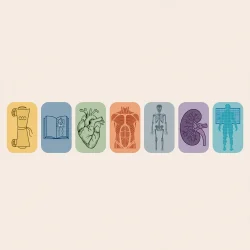
History of Medical Illustration: From Vesalius to the Digital Age
The history of medical illustration traces the evolution of anatomical visualization from Galenic anatomical texts and hand-copied manuscripts to Andreas Vesalius’s 1543 De humani corporis fabrica, Max Brödel’s carbon dust technique, and today’s DICOM-driven 3D rendering. Each stage replaced inference with direct observation, which shifted anatomy education from textual authority to reproducible, evidence-based imagery. Modern[…]