
What is medical illustration, and why does it matter so much in modern medicine, research, and education? At its core, medical illustration is the art and science of visually communicating complex biomedical information in a way that is clear, accurate, and compelling. Whether you are a healthcare professional, a medical educator, a pharmaceutical company, or a curious reader, understanding this field can change the way you look at anatomy, disease, and science altogether.
Medical illustrators sit at the unique crossroads of art and medicine. They translate what surgeons see in an operating theatre, what researchers observe under a microscope, or what educators need to explain to students – into precise, beautiful visuals that anyone can understand.
In this complete guide, we cover everything you need to know: the definition, history, types, tools, career paths, common applications, and the exciting future of this remarkable profession.
What is Medical Illustration? A Clear Definition
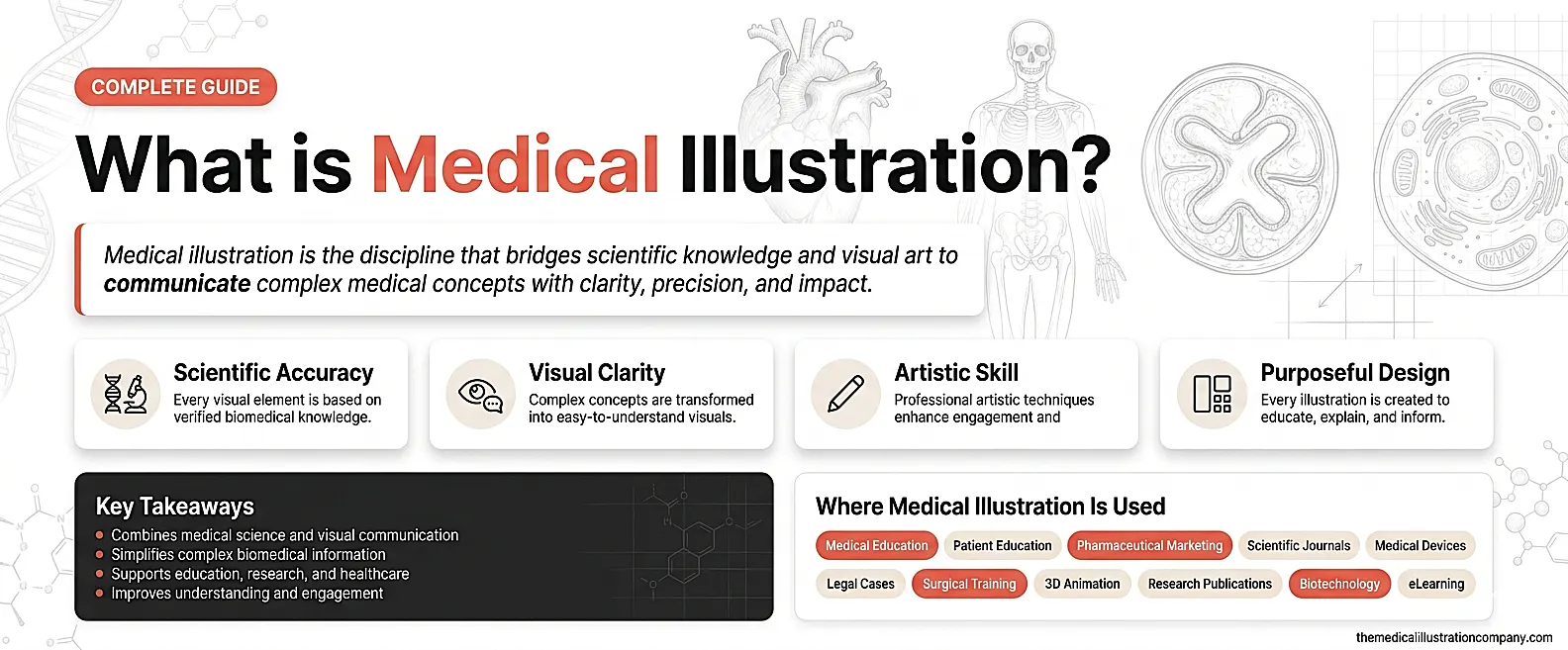
Medical illustration is a specialized branch of visual communication that uses art, design, and scientific knowledge to depict biomedical subjects. These subjects range from human anatomy and surgical procedures to microscopic organisms and pharmaceutical mechanisms.
According to the Association of Medical Illustrators (AMI), a medical illustrator is a professional who combines expertise in life sciences with skills in visual art to create images used in educational, research, clinical, and commercial settings.
The key elements that define medical illustration include:
- Scientific accuracy: Every detail must be medically and anatomically correct.
- Visual clarity: The image must communicate information without confusion.
- Purposeful design: Each illustration serves a specific educational, clinical, or commercial goal.
- Artistic skill: High-quality rendering brings the subject to life.
Simply put, medical illustration makes the invisible visible and the complex understandable.
A Brief History of Medical Illustration
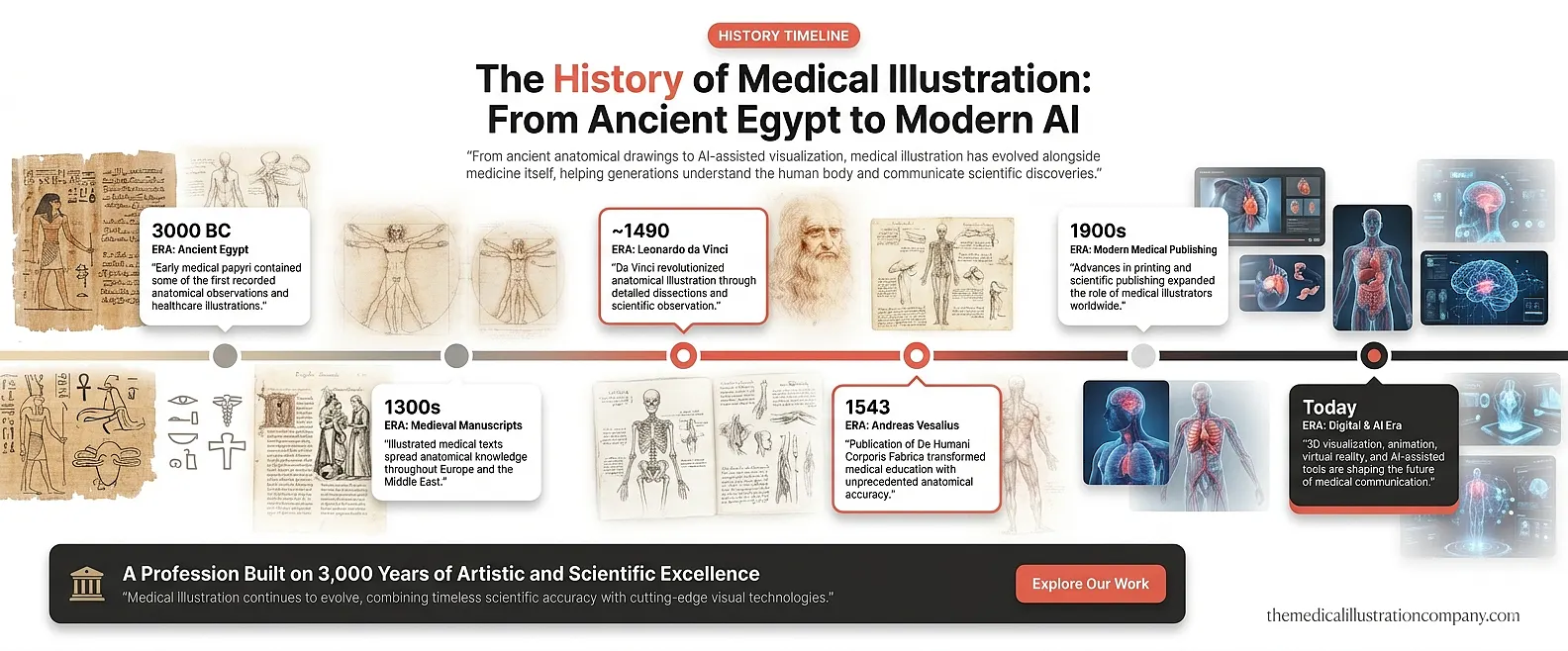
Medical illustration is far older than modern medicine itself. Its roots stretch back to ancient civilisations, and its evolution mirrors the progress of science and technology.
Ancient Beginnings
Ancient Egyptians and Greeks created rudimentary anatomical drawings on papyrus and stone. However, these were more symbolic than scientifically accurate.
The Renaissance Breakthrough
The field truly transformed during the Renaissance. Leonardo da Vinci produced extraordinarily detailed anatomical drawings based on his own cadaver dissections – a practice that was both bold and controversial at the time. His illustrations of the heart, muscles, and skeletal system remain astonishing to this day.
Andreas Vesalius, a 16th-century Flemish anatomist, collaborated with artists from Titian’s workshop to produce De Humani Corporis Fabrica (1543) – widely regarded as the first great work of modern anatomy. This publication set the gold standard for accuracy and artistry in medical depiction.
The Modern Era
The 20th century brought new tools and technologies. Medical illustration expanded from print into film, television, digital media, and eventually 3D animation. Today, programs in medical illustration exist at universities worldwide, and the field is recognised as a distinct, highly skilled profession.
Types of Medical Illustration
Medical illustration is not a single style or medium. Instead, it encompasses a wide variety of formats, each suited to different purposes and audiences.
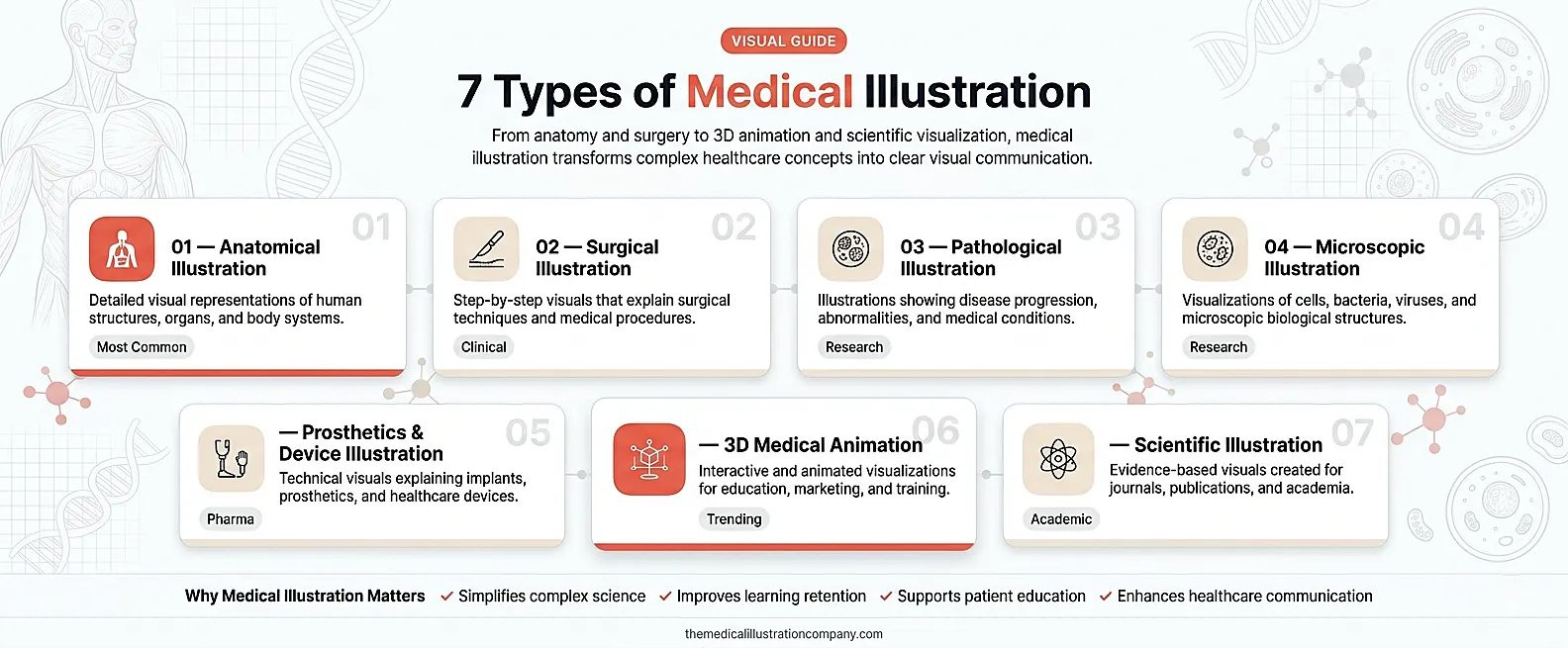
1. Anatomical Illustration
Anatomical illustrations depict the structure of the human body – or parts of it – in precise detail. These are used in textbooks, medical schools, clinical training materials, and patient education resources.
2. Surgical Illustration
Surgical illustrations show step-by-step operative procedures. Surgeons, students, and medical device companies rely on these to understand and communicate complex techniques.
3. Pathological Illustration
These illustrations depict disease processes – how a condition begins, progresses, and affects tissues or organs. They are commonly found in pharmaceutical marketing, patient information leaflets, and medical journals.
4. Microscopic and Cellular Illustration
At the cellular or molecular level, medical illustrators bring to life bacteria, viruses, DNA structures, protein interactions, and cellular processes that cannot be photographed easily.
5. Prosthetics and Medical Device Illustration
These images show how medical devices, implants, and prosthetics work within the body – essential for patents, marketing materials, and clinical training.
6. 3D Medical Illustration and Animation
Three-dimensional medical illustration and animation represent the cutting edge of the field. Learn more about the latest 3D medical illustration software used by professionals today.
7. Scientific Illustration
Scientific illustration extends beyond medicine into biology, botany, zoology, and geology. Our dedicated scientific illustration services provide high-quality visuals for research and publication.
Medical Illustration vs. Scientific Illustration: Key Differences
While the two fields overlap considerably, there are meaningful distinctions worth understanding:
| Feature | Medical Illustration | Scientific Illustration |
|---|---|---|
| Primary Focus | Human anatomy, clinical medicine, surgery | Broader natural sciences (biology, botany, zoology) |
| Typical Clients | Hospitals, pharma, medical publishers | Research institutions, universities, journals |
| Common Formats | 2D diagrams, 3D animations, surgical steps | Detailed specimen drawings, data visualisations |
| Regulatory Concern | High – must meet clinical accuracy standards | Moderate – must reflect scientific findings |
| Key Skill Overlap | Anatomy knowledge, digital tools, accuracy | Taxonomy knowledge, observation, precision |
What Does a Medical Illustrator Actually Do?
Many people wonder what the day-to-day role of a medical illustrator looks like. The answer varies enormously depending on specialisation, client, and medium.
For a detailed breakdown, see our guide on the job responsibilities of medical illustrators.
In general, a medical illustrator will:
- Collaborate with subject matter experts – surgeons, researchers, or educators – to understand the concept being illustrated.
- Research the anatomy, physiology, or clinical procedure thoroughly.
- Sketch initial concepts and review them with the client.
- Refine the artwork using specialist software such as Adobe Illustrator, ZBrush, or Cinema 4D.
- Deliver finished artwork in the required format: print, digital, or video.
- Make revisions based on expert clinical review.
The role requires both left-brain analytical thinking and right-brain creativity – a rare combination that makes skilled medical illustrators highly valued professionals.
Where is Medical Illustration Used?
The applications of medical illustration span virtually every corner of the healthcare, science, and education industries.
Medical Education and Training
Medical schools, nursing programmes, and allied health courses rely heavily on illustrated textbooks, atlases, and eLearning modules. High-quality illustrations help students understand three-dimensional structures from two-dimensional pages.
Medical illustrations are also central to medical illustrations for training videos, which are increasingly popular in continuing professional development.
Pharmaceutical and Biotech Marketing
Pharmaceutical companies use medical illustrations extensively to explain how drugs work at a molecular or cellular level – known as mechanisms of action (MOA) animations. These are used in sales presentations, regulatory submissions, and patient outreach.
Medical Journals and Research Publications
Research papers increasingly rely on high-quality visual content. Understanding the importance of scientific illustration images for research papers can significantly improve publication success rates.
If you are preparing a manuscript, it is worth reviewing the author guidelines for illustrations in medical and scientific journals to ensure your figures meet submission standards.
Legal and Expert Witness Illustrations
In personal injury cases, malpractice litigation, and insurance disputes, medical illustrations serve as powerful courtroom exhibits. They help juries and judges visualise injuries, surgical procedures, and medical conditions in plain terms.
Patient Education and Communication
Hospitals, clinics, and healthcare apps use medical illustration to explain diagnoses, treatment plans, and post-operative care to patients. Research consistently shows that patients who understand their condition are more likely to follow treatment plans.
Medical Device and Technology Companies
Device manufacturers use illustration to show how implants, stents, orthopaedic hardware, and diagnostic equipment function inside the body – both for regulatory approval and marketing purposes.
Why Medical Illustration Matters: The Importance You Should Know
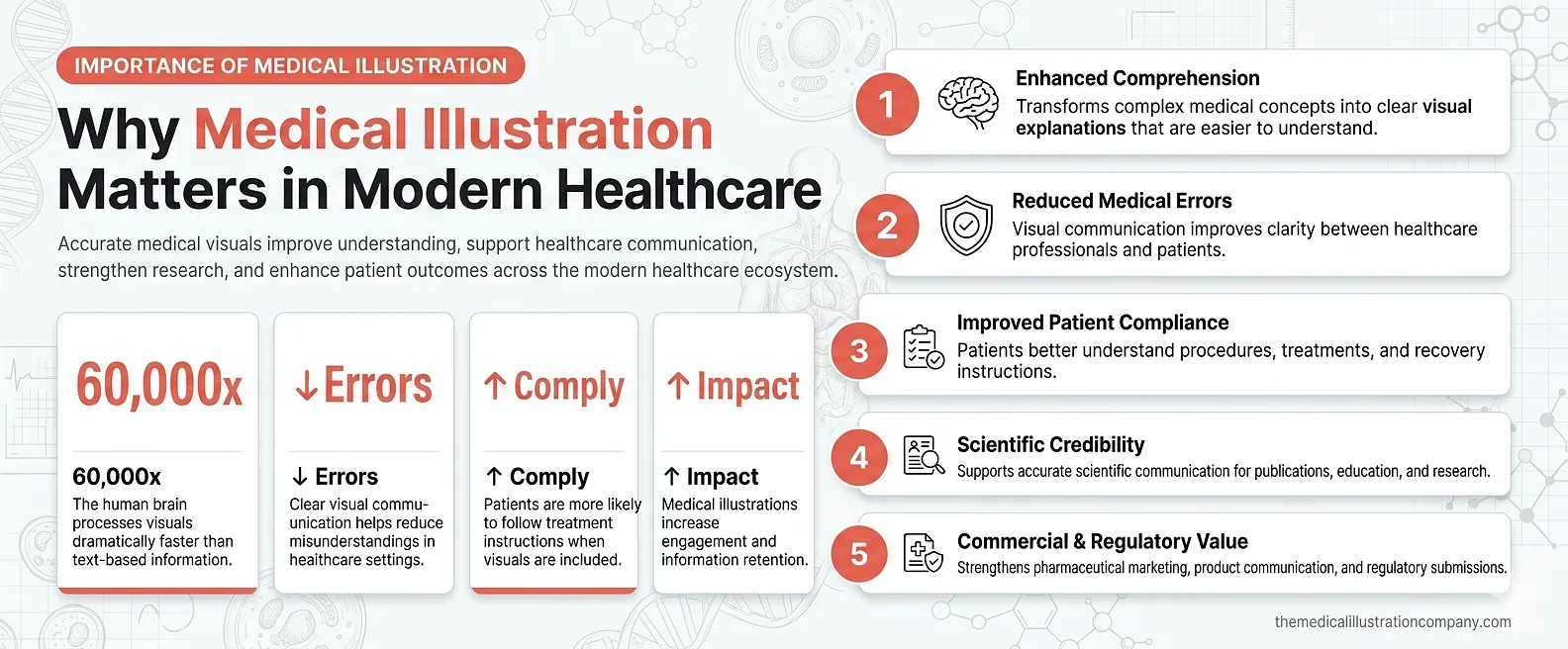
The importance of medical illustrations cannot be overstated. Here is a summary of why this field has become indispensable:
- Enhanced comprehension: Visuals are processed 60,000 times faster than text by the human brain (according to research published in the National Institutes of Health library).
- Reduced medical errors: Clear surgical diagrams and anatomical references reduce the risk of mistakes in clinical settings.
- Improved patient compliance: Patients who are shown visual explanations of their conditions are more engaged in their own care.
- Scientific credibility: High-quality journal illustrations improve the perceived credibility and impact of research findings.
- Commercial value: Pharmaceutical and medical device companies use illustration to communicate value propositions clearly in regulatory and commercial contexts.
Tools and Software Used in Medical Illustration
Modern medical illustrators work with an impressive range of digital and traditional tools. The choice of software depends on the type of output required.
| Tool / Software | Primary Use | Common Output |
|---|---|---|
| Adobe Illustrator | 2D vector illustration | Print, digital, journals |
| Adobe Photoshop | Image editing, compositing | Print, digital publishing |
| ZBrush | 3D sculpting of anatomy | 3D renders, animation prep |
| Cinema 4D / Maya / Blender | 3D modelling and animation | MOA animations, eLearning |
| Procreate (iPad) | Digital painting and sketching | Concept art, editorial |
| CorelDRAW | Vector illustration | Medical print materials |
| Maxon BodyPaint 3D | Texture painting for 3D models | Pharmaceutical marketing |
Alongside traditional software, many studios now use AI-assisted tools and photogrammetry data to accelerate initial modelling. However, human expertise remains irreplaceable for ensuring clinical accuracy. You can explore a detailed breakdown of the most popular 3D medical illustration software in our dedicated guide.
File Formats in Medical Illustration
Choosing the correct file format is critical for ensuring quality across different applications. Many clients request illustrations in vector formats for scalability. Read our detailed guide on medical vector illustrations in AI and EPS file formats to understand which format suits your project.
Here is a quick reference:
- .AI (Adobe Illustrator): Best for editable vector artwork; ideal for print and digital use.
- .EPS (Encapsulated PostScript): Universal vector format compatible with most publishing software.
- .SVG (Scalable Vector Graphics): Perfect for web-based illustration and interactive content.
- .TIFF / .PNG: High-resolution raster formats for print publications and journals.
- .MP4 / .MOV: Video formats for animated sequences and training materials.
Career in Medical Illustration: Education and Qualifications
Pursuing a career in medical illustration requires a blend of artistic talent and scientific rigour. Here is a step-by-step overview of the typical educational pathway:
- Earn an undergraduate degree in art, biology, or a related subject.
- Complete a postgraduate programme in medical illustration – accredited programmes exist in the United States, United Kingdom, Canada, and Australia. The Association of Medical Illustrators (AMI) and the Medical Artists’ Association of Great Britain (MAA) are key professional bodies.
- Build a portfolio that demonstrates both scientific accuracy and artistic ability.
- Gain professional experience through internships or junior roles in hospitals, publishers, or studios.
- Consider board certification through the AMI, which validates expertise and enhances career prospects.
The Association of Medical Illustrators (AMI) provides excellent resources on accredited programmes, certification, and professional development.
Common Mistakes to Avoid When Commissioning Medical Illustration
Whether you are a researcher, a pharmaceutical company, or a medical educator, commissioning medical illustration for the first time can be daunting. Here are the most frequent mistakes clients make – and how to avoid them.
- Providing insufficient reference material: Medical illustrators need detailed clinical references, journal images, or expert descriptions. Vague briefs lead to inaccurate results.
- Prioritising speed over accuracy: Medical illustration requires time for research, sketching, review, and revision. Rushing the process compromises clinical accuracy.
- Ignoring file format requirements: Always confirm the required output format (vector, raster, video) before briefing your illustrator.
- Skipping the clinical review stage: Every medical illustration should be reviewed by a subject matter expert before final delivery.
- Underestimating the value of experience: Choosing the cheapest option can result in scientifically inaccurate work that damages your reputation.
Expert Tips for Working With a Medical Illustrator
If you want to get the very best from your medical illustration project, follow these expert tips:
- Be specific about your audience. An illustration for medical students differs significantly from one designed for patients or for a peer-reviewed journal.
- Share reference materials generously. Published papers, annotated photographs, textbook images, and written descriptions all help the illustrator understand your needs.
- Involve a subject matter expert early. Clinical experts should be involved from the initial briefing stage, not just at the end.
- Plan for multiple revision rounds. At least two to three rounds of revision are typical for complex projects. Build this time into your schedule.
- Agree on usage rights upfront. Discuss licensing, copyright, and exclusivity before the project begins to avoid disputes later.
Our team at The Medical Illustration Company brings decades of combined expertise to every project. Explore our full range of medical illustration services to find the right solution for your project.
The Future of Medical Illustration
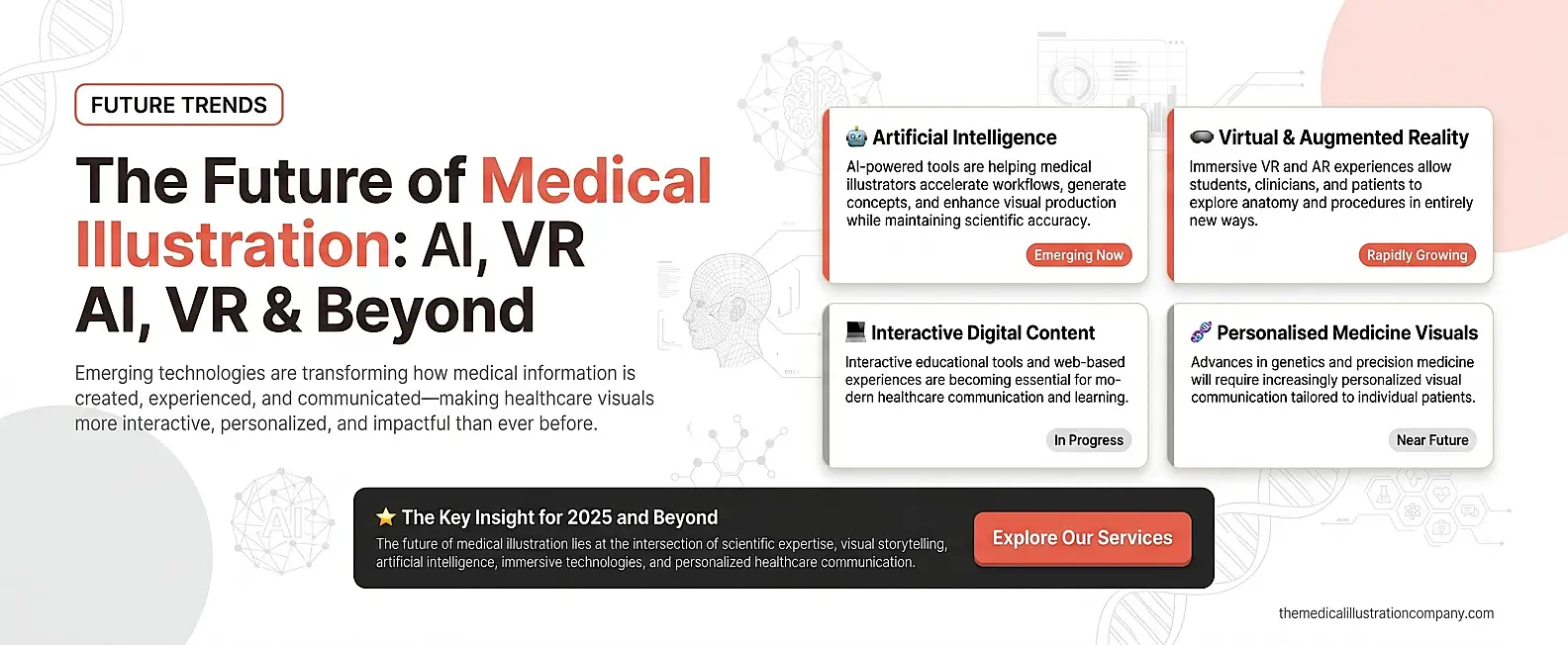
The field of medical illustration is evolving rapidly. Several transformative trends are shaping its future:
Artificial Intelligence
AI-powered tools can now generate anatomical models from CT and MRI data automatically. However, as noted by researchers at Nature Medicine, AI still lacks the clinical judgement required to create accurate, contextually appropriate medical images. Human medical illustrators remain essential for quality assurance.
Virtual Reality (VR) and Augmented Reality (AR)
Medical schools and surgical training programmes increasingly use VR environments populated with medical illustration content. Surgeons can practice procedures on photorealistic 3D anatomical models before entering the operating room.
Interactive Digital Content
Web-based interactive anatomy models, animated patient education tools, and touchscreen surgical planners are becoming standard. Medical illustrators who can code (or collaborate with developers) are in growing demand.
Personalised Medicine
As personalised medicine advances, medical illustration will be called upon to depict patient-specific anatomy, genetic variations, and individualised treatment pathways.
Why What is Medical Illustration Still Matters
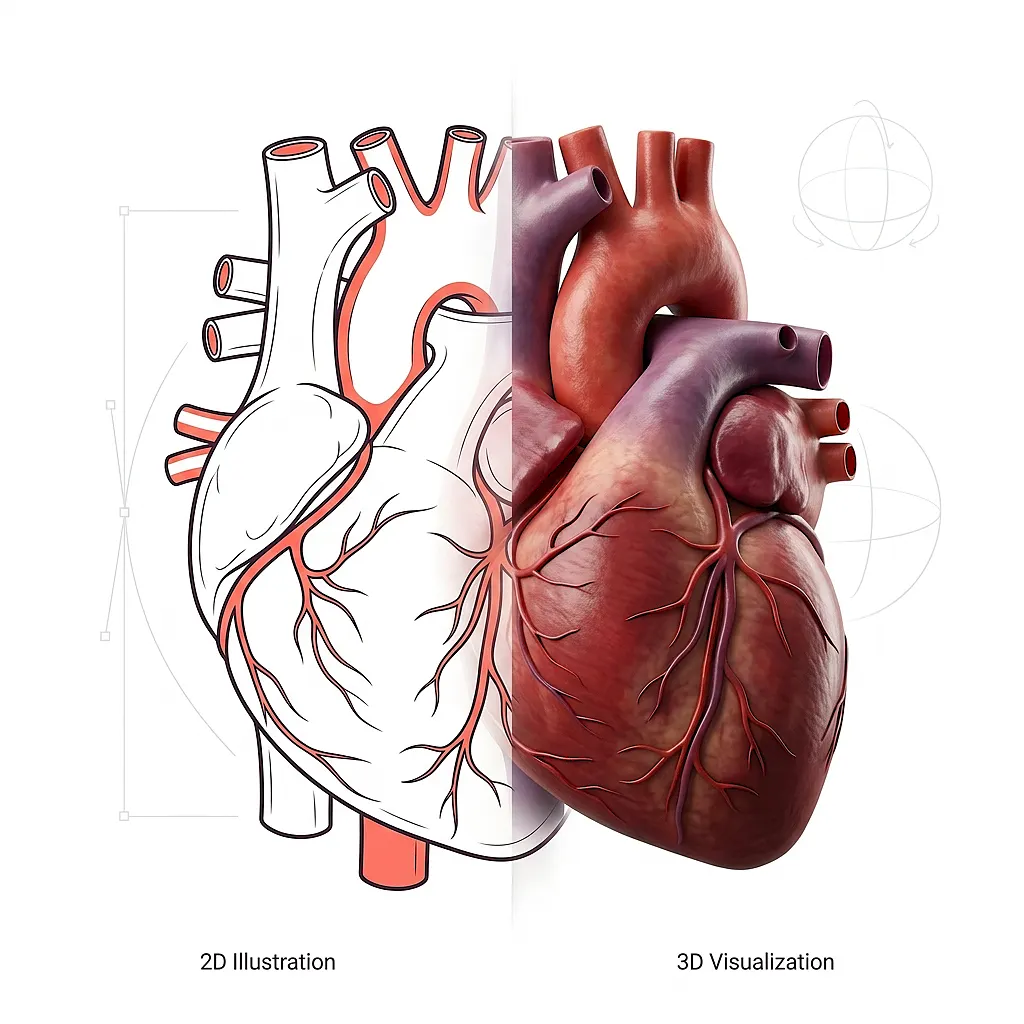
Understanding what is medical illustration reveals far more than a simple artistic discipline. It is a critical pillar of healthcare communication, scientific education, and medical research.
From Leonardo da Vinci’s Renaissance sketches to today’s immersive 3D animations, medical illustration has always served one fundamental purpose: making complex biological and medical information accessible, accurate, and visually compelling.
Whether you are commissioning your first medical illustration for a journal paper, building a suite of surgical training materials, or exploring a career in this remarkable field, the key takeaway is this: quality medical illustration requires both scientific mastery and artistic excellence.
At The Medical Illustration Company, we deliver exactly that. Visit our website to learn more, or explore our full medical illustration services and get in touch with our expert team today.
Frequently Asked Questions: What is Medical Illustration?
Q1: What is medical illustration in simple terms?
Medical illustration is the creation of accurate, visually clear images that explain medical, biological, or scientific concepts. These images appear in textbooks, journals, pharmaceutical materials, surgical guides, and patient education resources.
Q2: What qualifications does a medical illustrator need?
Most professional medical illustrators hold a postgraduate degree in medical illustration or a related field. In the United States, the Association of Medical Illustrators (AMI) offers board certification. In the UK, the Medical Artists’ Association of Great Britain (MAA) is the key accrediting body.
Q3: How long does it take to produce a medical illustration?
Timelines vary widely depending on complexity. A simple anatomical diagram may take a few days; a full 3D animation with multiple scenes can take several weeks. Most projects involve research, concept development, initial sketches, client review, and final rendering stages.
Q4: What is the difference between medical illustration and medical photography?
Medical photography captures real clinical images (surgical photographs, microscopy images, patient photographs). Medical illustration, by contrast, creates purpose-built visual representations that can simplify, annotate, or reconstruct information in ways photography cannot.
Q5: Can medical illustrations be used as legal exhibits?
Yes. Medical illustrations are widely used as expert witness exhibits in personal injury cases, malpractice suits, and insurance disputes. They must be produced and reviewed by qualified medical professionals to be admitted as evidence.
Q6: What is the cost of commissioning medical illustration?
Costs depend on complexity, format (2D or 3D), usage rights, and turnaround time. Simple diagrams may start from a few hundred pounds or dollars; complex 3D animation projects can run to several thousand. Always request a detailed quotation from a qualified studio.
Q7: How do I know if my medical illustration meets journal submission standards?
Check the specific journal’s author guidelines for figure resolution, format, and labelling requirements. Our guide on author guidelines for illustrations in medical and scientific journals provides a comprehensive overview.
Authoritative External References
The following authoritative sources were referenced in preparing this article:
- Association of Medical Illustrators (AMI) – The leading professional body for medical illustrators in North America, providing accreditation, certification, and resources.
- National Institutes of Health (NIH) – PubMed Central – The world’s largest biomedical research database and the primary repository for peer-reviewed medical literature.
- Nature Medicine – AI in Medical Imaging Research – Peer-reviewed research on the role of artificial intelligence in medical imaging and its implications for clinical accuracy.
Transform Complex Science Into Clear Medical Visuals
From anatomical illustrations and surgical graphics to scientific visualizations, our expert team helps healthcare brands, researchers, publishers, and medical device companies communicate with clarity and precision.