
Medical illustration for patient education is the use of scientifically accurate, easy-to-understand visuals to explain complex medical conditions, anatomy, treatments, procedures, and healthcare information to patients. Instead of relying only on complicated medical terminology, these illustrations use clear diagrams, labeled anatomy, step-by-step visuals, and simplified explanations to help patients understand what is happening inside their bodies and what to expect during treatment. Professional medical illustrations are carefully designed to maintain anatomical accuracy while making information accessible to people without a medical background. They can be used in hospitals, clinics, patient brochures, websites, apps, consent materials, and educational resources to improve communication between healthcare professionals and patients.
Quick Summary: Medical illustration for patient education transforms confusing diagnoses, procedures, and anatomy into visuals that patients can actually understand. In this guide, you’ll learn what medical illustration is, why it matters, how it works, and how healthcare providers across the United States are using it to improve patient outcomes.
What is Medical Illustration for Patient Education?
Medical illustration for patient education is the creation of scientifically accurate, visually clear images that help patients understand their health conditions, treatment plans, procedures, and anatomy.
These illustrations are not random clipart or generic stock images. They are crafted by trained professionals – called certified medical illustrators – who combine deep knowledge of human biology with advanced artistic and design skills.

What Makes a Medical Illustration “Educational”?
Not every medical image qualifies as a true patient education illustration. True educational medical illustrations must be:
- Scientifically accurate – every anatomical detail must match real physiology
- Simplified appropriately – complex structures are shown at the right level of detail for the audience
- Contextually relevant – tied directly to the patient’s specific condition or procedure
- Visually accessible – easy to read for people with no medical background
- Culturally sensitive – representative of diverse bodies, skin tones, and backgrounds
Who Creates Medical Illustrations?
Medical illustrators are specialists who typically hold a Master of Science in Medical Illustration. Programs like those at Johns Hopkins University, the University of Toronto, and Augusta University are among the few accredited programs in North America.
These professionals are often members of the Association of Medical Illustrators (AMI), the leading professional body for the field in the United States and Canada.
Why Visual Communication Matters in Healthcare
Healthcare in the United States has a communication problem.
The Health Literacy Crisis
- According to the U.S. Department of Health and Human Services, approximately 36% of U.S. adults have low health literacy
- Nearly 9 out of 10 adults struggle to understand everyday health information when it’s complex or unfamiliar
- Patients with low health literacy are more likely to:
- Skip medications or take them incorrectly
- Miss follow-up appointments
- Delay seeking care
- Experience worse health outcomes overall

Why Words Alone Are Not Enough
When a doctor explains a diagnosis like “you have a herniated disc at L4-L5 with nerve impingement,” most patients leave the office confused.
Written discharge instructions often fare no better. Studies show that:
- Patients forget 40–80% of what their doctor tells them during appointments
- Of what they do remember, about half is recalled incorrectly
- Even educated, literate patients struggle with medical jargon
This is exactly where medical illustration for patient education steps in.
A well-designed visual of the spine – showing exactly where the disc is, what it means for nearby nerves, and why the patient feels pain in a specific location – communicates in seconds what paragraphs of text cannot.
The Science Behind Visual Learning in Medicine
The effectiveness of medical illustration is not just intuition – it’s backed by research.

How the Brain Processes Visuals
- The human brain processes images 60,000 times faster than text
- Visual information accounts for 90% of all information transmitted to the brain
- People retain approximately 65% of information when it’s paired with a relevant image, compared to just 10% when delivered through text alone
The Dual Coding Theory
Developed by psychologist Allan Paivio, Dual Coding Theory explains that the brain encodes information through two separate systems:
- Verbal system – language and words
- Non-verbal (visual) system p – images and spatial information
When both systems are activated simultaneously – as happens when a patient reads a label while looking at an illustration — comprehension and retention dramatically improve.
Research Supporting Medical Illustration
Multiple peer-reviewed studies support the use of visuals in patient education:
- A study published in Patient Education and Counseling found that patients who received illustrated instructions for post-surgical wound care had significantly better adherence than those who received text-only instructions
- Research from the Journal of the American Medical Association (JAMA) showed that illustrated informed consent documents improved patient understanding of procedures
- Pediatric patients shown illustrated explanations of their diagnosis reported lower anxiety levels before procedures
Types of Medical Illustrations Used in Patient Education
Medical illustration for patient education comes in many forms. Each type serves a different purpose depending on the clinical context.

1. Anatomical Illustrations
These show body structures – organs, bones, muscles, nerves, blood vessels – in accurate detail.
Used for:
- Explaining where a tumor or injury is located
- Showing patients what an organ looks like and how it functions
- Teaching patients about normal anatomy before discussing what has gone wrong
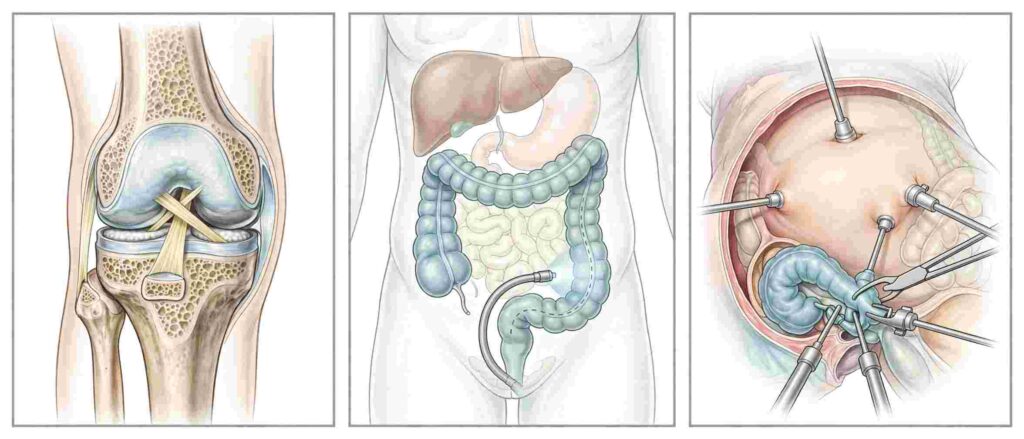
Example: A labeled cross-section of the knee joint showing cartilage, ligaments, and the meniscus – used to explain an ACL tear.
2. Procedural Illustrations
These walk patients through what will happen step-by-step during a medical procedure.
Used for:
- Pre-operative education
- Explaining minimally invasive techniques
- Reducing procedure-related anxiety
Example: A step-by-step visual of how a colonoscopy is performed, showing the path of the scope through the colon.
3. Surgical Illustrations
More detailed than procedural illustrations, surgical illustrations show exactly what happens inside the body during an operation.
Used for:
- Surgical informed consent discussions
- Explaining reconstructive or corrective procedures
- Post-surgical follow-up education
Example: An illustration showing how a laparoscopic appendectomy is performed, including the port placement and removal of the appendix.

4. Pathological Illustrations
These show what a disease or condition looks like inside the body – how it develops, what it does to tissue, and how it progresses.
Used for:
- Explaining chronic conditions like diabetes, cancer, or heart disease
- Showing patients the mechanism of their illness
- Illustrating disease progression or stages
Example: A comparison showing healthy arterial tissue versus an artery with atherosclerotic plaque buildup.
5. Mechanism of Action (MOA) Illustrations
These explain how a drug, treatment, or biological process works at a cellular or molecular level – simplified for a general audience.
Used for:
- Medication education
- Explaining immunotherapy or biologics
- Teaching about vaccines and immune response
Example: An illustration showing how insulin binds to a cell receptor and allows glucose to enter the cell – used to help diabetic patients understand their condition and medication.
6. Infographics and Visual Summaries
These combine simplified illustrations with concise text to deliver key health messages at a glance.
Used for:
- Public health campaigns
- Patient handouts
- Health literacy materials for waiting rooms or online portals
Example: A colorful infographic showing the warning signs of a stroke using the F.A.S.T. acronym.
7. Interactive and Animated Illustrations
Digital and animated versions of medical illustrations bring movement into the equation – showing how the heart beats, how a joint moves, or how cancer cells divide.
Used for:
- Patient portals and apps
- Pre-operative online education modules
- Telehealth and remote patient education
Example: An animated video showing how plaque in coronary arteries leads to a heart attack – narrated and illustrated for a general patient audience.
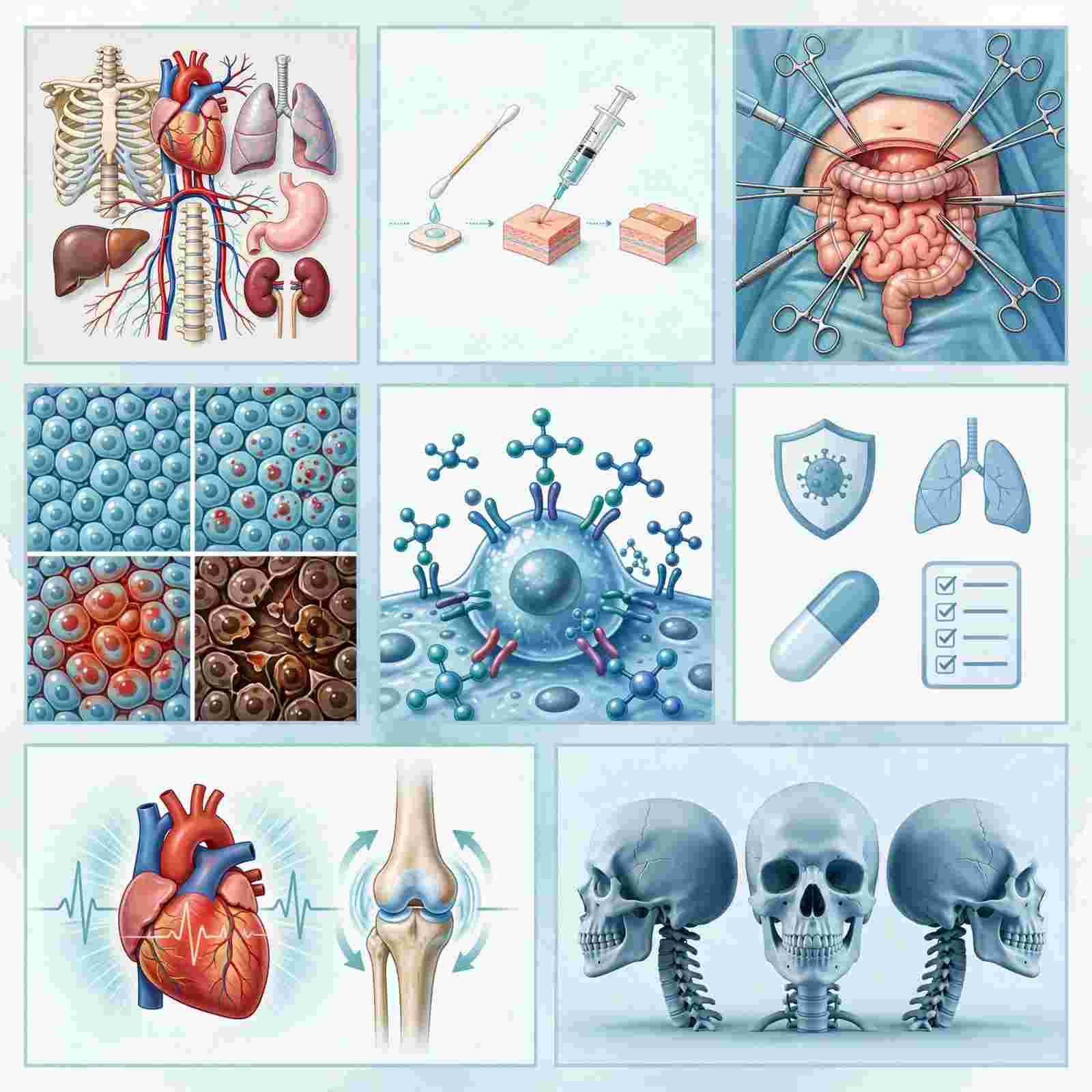
8. 3D Medical Illustrations
Three-dimensional renders allow patients (and providers) to see structures from multiple angles.
Used for:
- Orthopedic and neurosurgical education
- Explaining implant placement
- Helping patients visualize complex spatial relationships
Example: A 3D illustration showing a spinal cord, vertebrae, and where a specific disc herniation occurs from multiple viewpoints.
How Medical Illustrators Work With Healthcare Teams
Creating effective medical illustration for patient education is a collaborative process. It’s never done in isolation.
The Typical Workflow
Step 1: Identifying the Educational Need
Healthcare providers identify a gap – patients aren’t understanding a particular diagnosis, procedure, or treatment. They bring this need to a medical illustrator or a healthcare communications team.
Step 2: Research and Reference Gathering
The medical illustrator:
- Reviews anatomy textbooks and peer-reviewed literature
- Consults with the clinical team (doctors, nurses, pharmacists)
- Examines medical imaging (CT scans, MRIs, pathology slides) if available
- Studies existing patient education materials for gaps
Step 3: Concept Development
The illustrator creates rough sketches or wireframes showing the proposed composition, level of detail, and visual approach. These are reviewed by the clinical team for accuracy.
Step 4: Clinical Review
This is critical. A physician, surgeon, or appropriate specialist reviews every illustration for:
- Anatomical accuracy
- Correct representation of the disease or procedure
- Appropriate level of simplification (not oversimplifying to the point of inaccuracy)
Step 5: Patient Testing (Best Practice)
Ideally, drafts are tested with actual patients or patient advocates to ensure the illustration is:
- Understandable to a non-medical audience
- Not frightening or off-putting
- Culturally appropriate for the target population
Step 6: Final Production
The illustration is finalized in the appropriate format – print, digital, animated, or interactive – and integrated into education materials.
Key Benefits of Medical Illustration for Patients
When used effectively, medical illustration for patient education delivers measurable benefits.

For Patients
- Better understanding of their condition and treatment plan
- Reduced anxiety before procedures or surgeries
- Improved medication adherence when they understand why a drug is needed
- More meaningful conversations with their healthcare provider
- Greater sense of control over their own health journey
- Improved ability to explain their condition to family members and caregivers
For Healthcare Providers
- Shorter explanation time – visuals replace lengthy verbal explanations
- Fewer follow-up questions about basic information already covered in illustrated materials
- Better informed consent – patients truly understand what they’re agreeing to
- Reduced liability risk when patients can demonstrate understanding
- Higher patient satisfaction scores – better communication leads to better patient experience
For Health Systems
- Reduced readmission rates when patients understand and follow discharge instructions
- Improved population health outcomes especially in communities with lower health literacy
- Cost savings from fewer preventable complications
- Stronger patient-provider relationships built on clear communication
Medical Illustration for Different Patient Populations
One of the most powerful aspects of medical illustration is how it can be tailored to meet the needs of specific populations.

Pediatric Patients
Children process information differently than adults. Medical illustration for kids:
- Uses friendly, approachable characters and simplified anatomy
- Avoids frightening or graphic imagery
- Employs storytelling – following a character through a procedure
- Is designed to include parents and caregivers in the visual narrative
Example: A colorful illustration of a friendly cartoon body showing where the “ouch spot” is and what the doctor will do to help – used to prepare children for an appendectomy.
Elderly Patients
Older adults may have vision changes, cognitive changes, or lower comfort with digital media. Illustrations for elderly patients:
- Use larger fonts and bolder contrast
- Avoid dense, cluttered compositions
- Feature age-appropriate figures
- Are often designed for print rather than digital delivery
Patients With Low Health Literacy
For patients with limited reading ability or low health literacy, illustrations are especially critical:
- Use minimal text – let the image do the work
- Employ sequential panels (like a comic strip) to show steps in order
- Use universal symbols and familiar visual cues
- Are tested rigorously with the actual target audience
Non-English Speaking Patients
The United States is home to tens of millions of people who speak a language other than English at home. Medical illustration for patient education offers a unique advantage here:
- Images transcend language barriers
- Translated labels or captions can be added without redrawing the illustration
- Culturally adapted skin tones, clothing, and settings help diverse patients see themselves in the material
Patients With Disabilities
Illustrations can be adapted for patients with various disabilities:
- High-contrast versions for patients with low vision
- Tactile illustrations (raised line drawings) for blind patients
- Alt text and screen reader compatibility for digital versions
- Simple, icon-based visuals for patients with cognitive disabilities or autism spectrum conditions
Digital vs. Print: Where Medical Illustrations Live Today
The landscape of medical illustration for patient education has shifted dramatically in recent years.
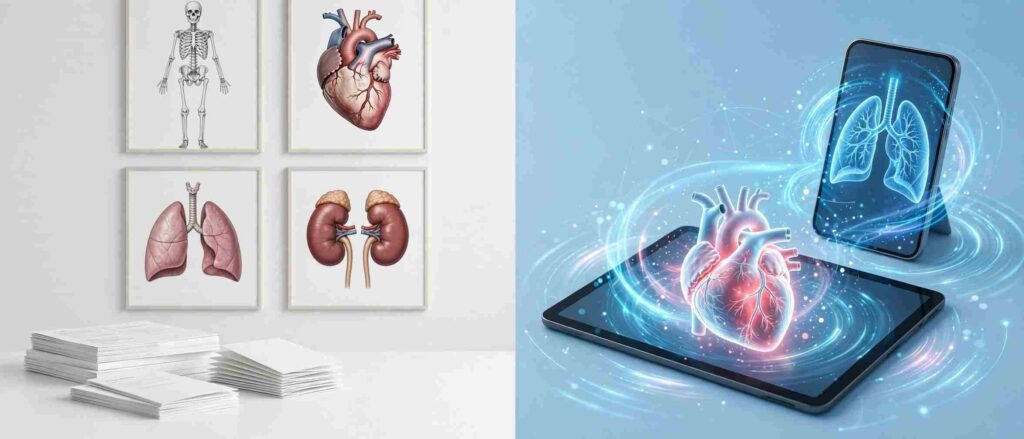
Print Materials
Despite the digital revolution, print remains vital in patient education:
- Brochures and pamphlets in waiting rooms
- Illustrated discharge instructions given at hospital checkout
- Patient workbooks for chronic disease management programs
- Posters in exam rooms and public health settings
Advantages of print:
- Accessible to patients without smartphones or internet access
- Can be taken home for reference
- Easier for elderly patients who are less comfortable with technology
Digital and Interactive Media
Digital medical illustrations offer capabilities that print cannot:
- Animation – showing movement, blood flow, or disease progression
- Interactivity – patients can click on areas to learn more
- Accessibility features – zoom, alt text, audio narration
- Integration with EHR portals – patients can review illustrations in their online health records (such as MyChart)
- Telehealth compatibility – providers can share screens with illustrated visuals during video visits
Patient Portal Integration
Leading U.S. health systems like Mayo Clinic, Cleveland Clinic, and Kaiser Permanente have invested in integrating illustrated patient education content directly into their patient portals.
This means patients can:
- View illustrated explanations of their specific diagnosis after an appointment
- Watch animated procedure videos before a scheduled surgery
- Review step-by-step illustrated medication guides
Mobile Apps
Health and wellness apps increasingly use illustrated visuals to educate users about:
- Anatomy and body systems
- Exercise form and injury prevention
- Chronic disease management
- Maternal and infant health
Real-World Applications: Where You’ll See Medical Illustration
Medical illustration for patient education appears across the entire U.S. healthcare ecosystem.
Hospitals and Health Systems
- Pre-operative education packets
- Illustrated informed consent forms
- Post-surgical wound care instructions
- Labor and delivery preparation guides
Physician Offices and Clinics
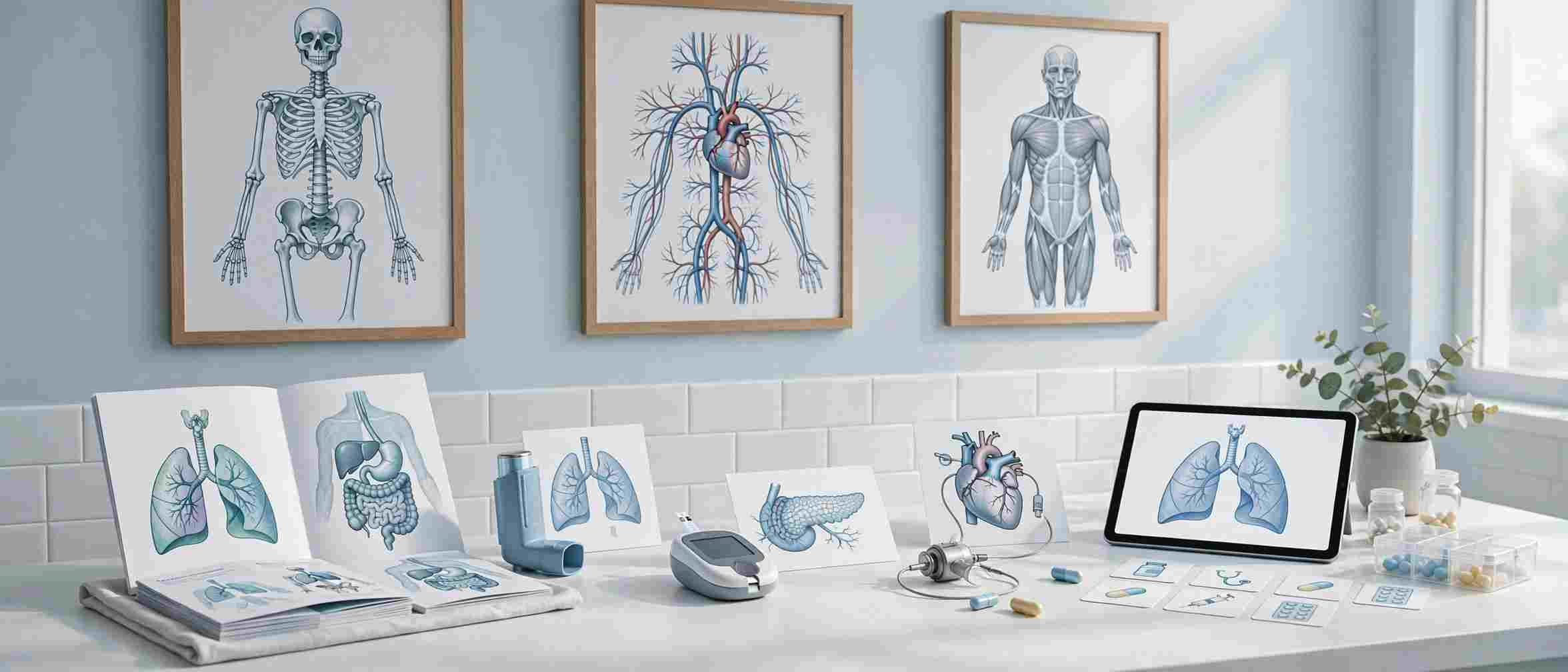
- Illustrated posters explaining common conditions
- Handouts for newly diagnosed patients
- Visual guides for medication administration (insulin injections, inhaler use)
Pharmacies
- Illustrated medication guides for prescriptions
- Visual instructions for medical devices (blood glucose monitors, epinephrine auto-injectors)
Public Health Campaigns
- CDC, NIH, and state health departments use illustrated infographics to communicate:
- Vaccine information
- Cancer screening guidelines
- Nutrition and physical activity recommendations
- Disease outbreak information
Medical Device Companies
- Patient guides for implantable devices (pacemakers, cochlear implants)
- Instructions for at-home monitoring equipment
- Preparation guides for diagnostic tests
Telehealth Platforms
- On-screen visuals shared during virtual visits
- Illustrated care plans sent via secure messaging
- Video education libraries
Health Insurance Companies
- Illustrated explanations of coverage and benefits
- Visual guides to understanding Explanation of Benefits (EOB) documents
How to Choose or Commission Medical Illustrations
Whether you’re a healthcare organization, a pharmaceutical company, or an individual provider, finding the right medical illustration partner is important.
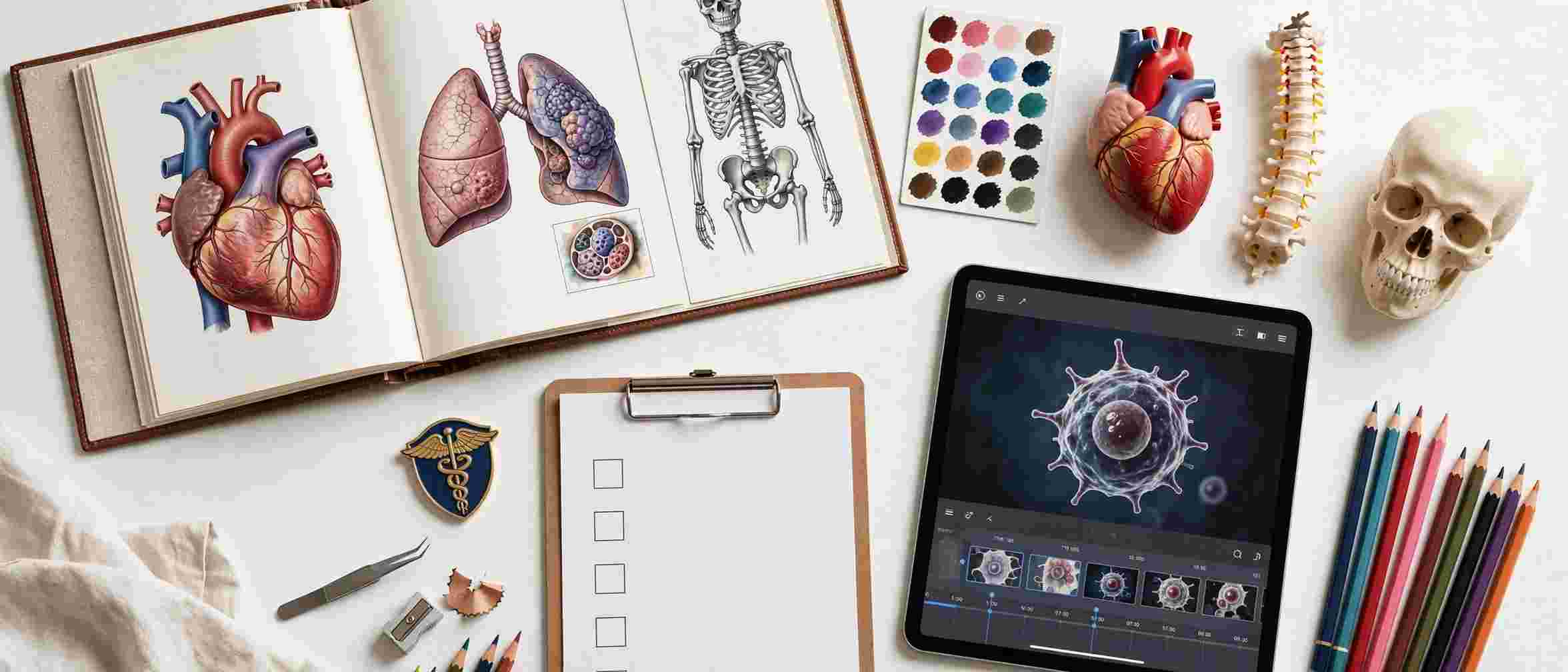
What to Look For in a Medical Illustrator
- Certification – Look for Board Certified Medical Illustrators (BCMI) credentialed by the AMI Board of Certification
- Relevant portfolio – Their past work should match the clinical area you need (surgical, oncology, cardiology, etc.)
- Collaborative process – They should involve clinicians in review
- Scientific accuracy – Ask about their process for ensuring anatomical correctness
- Patient-centered approach – Their work should be designed with the patient audience in mind, not just the clinician
Key Questions to Ask
- Have they worked with healthcare organizations or publishers before?
- What is their clinical review process?
- Can they produce illustrations in multiple formats (print, digital, animated)?
- Do they have experience with diverse patient populations?
- Can they provide accessibility-compliant versions of their work?
Where to Find Medical Illustrators
- AMI (Association of Medical Illustrators) Directory – The leading directory of professional medical illustrators in North America (ami.org)
- Healthcare communications agencies – Many agencies specialize in patient education and have in-house or contracted illustrators
- Academic medical centers – Some hospitals have in-house medical illustration departments
- Freelance platforms – While less common, some certified medical illustrators work independently
Cost Considerations
Medical illustration is a specialized field, and quality work reflects that. Factors that affect cost include:
- Complexity and number of illustrations
- Level of detail required
- Number of revision rounds
- Format (static vs. animated vs. interactive)
- Licensing terms (single use, perpetual, exclusive)
Ethical and Cultural Considerations
High-quality medical illustration for patient education must navigate important ethical and cultural terrain.
Representation and Diversity
Historically, medical illustrations have defaulted to white, male figures. This creates a significant problem:
- Patients from underrepresented groups may not identify with the imagery
- Skin tone variations matter – conditions like rashes, jaundice, or cyanosis look different on darker skin tones
- Illustrating a range of body types, ages, and ethnicities reflects the actual U.S. patient population
Best practice: Illustrators and healthcare organizations should intentionally design for diversity, including varied skin tones, body types, ages, and identities.

Avoiding Stigmatizing Imagery
Medical illustrations must be designed carefully to avoid:
- Dehumanizing patients by showing only body parts without contextual humanity
- Stigmatizing mental illness, obesity, addiction, or other sensitive conditions
- Creating fear or anxiety through unnecessarily graphic or alarming imagery
Informed Consent and Image Use
When medical illustrations are derived from or based on actual patient cases:
- Patient privacy must be protected
- Appropriate institutional permissions must be secured
- Identifiable features must not appear in educational materials
Accuracy vs. Simplification
There is always tension between making something simple enough for patients and keeping it accurate enough for clinical use. The best medical illustrators know how to:
- Identify which details are essential and which can be safely omitted
- Simplify without distorting
- Add labels, legends, and callouts to guide interpretation
The Future of Medical Illustration in Patient Education
The field of medical illustration for patient education is evolving rapidly, driven by technology and changing healthcare delivery.
Artificial Intelligence and Medical Illustration
AI is beginning to influence the field in meaningful ways:
- AI-assisted generation of anatomical visuals from medical imaging data
- Automatic adaptation of existing illustrations for different literacy levels or languages
- Personalized visuals generated from a patient’s own imaging data (e.g., showing a patient their actual tumor on a 3D model)
However, AI-generated medical imagery carries risks – inaccuracy, bias, and lack of clinical oversight. The role of certified medical illustrators remains critical in ensuring quality and accuracy.

Augmented Reality (AR) and Virtual Reality (VR)
AR and VR are opening entirely new dimensions for patient education:
- Patients can put on a VR headset and virtually “walk through” their upcoming surgery
- AR apps allow patients to point their phone at their body and see an illustrated layer of anatomy
- 3D printed anatomical models – based on a patient’s own scans – help patients understand exactly what surgeons will do
Personalized Patient Education
The future of medical illustration for patient education is personalized:
- Illustrations generated or adapted based on a patient’s specific diagnosis, imaging, and demographics
- Integration with Electronic Health Records (EHRs) to deliver the right visuals at the right time in the care journey
- Patient-specific visual care plans that update as a condition progresses or responds to treatment
Plain Language + Visual Integration
Regulatory and accreditation bodies are increasingly emphasizing health literacy as a quality metric. Organizations like The Joint Commission, URAC, and the National Committee for Quality Assurance (NCQA) are pushing for clearer, more accessible patient communication.
This is fueling investment in:
- Illustrated medication guides
- Visual-first patient education platforms
- Illustrated shared decision-making tools
Telehealth Expansion
The rapid expansion of telehealth following the COVID-19 pandemic has created new demand for digital medical illustrations that can be:
- Shared on-screen during video visits
- Sent securely to patients after virtual appointments
- Embedded in follow-up care instructions delivered electronically
FAQs About Medical Illustration for Patient Education
Q: Is medical illustration only useful for complex diagnoses?
No. Medical illustration for patient education is valuable for a wide range of situations – from explaining how to use an inhaler correctly to illustrating what happens during a routine colonoscopy. Even “simple” health topics benefit from clear visuals.
Q: How is a medical illustration different from a regular anatomy diagram?
Standard anatomy diagrams are designed for students and clinicians – they show maximum detail and use technical terminology. Patient education illustrations are designed for a general, non-medical audience – they simplify, focus on what’s relevant to the patient’s situation, and use plain language.
Q: Can a doctor create their own patient education illustrations?
Some physicians do create basic sketches during patient consultations, which can be very helpful in the moment. However, professionally produced medical illustrations for handouts, portals, or publications should be created by certified medical illustrators to ensure accuracy, clarity, and appropriate visual quality
Q: Are illustrated patient education materials covered or reimbursed?
Patient education materials – including illustrated ones – are generally considered part of the overhead cost of providing healthcare services. Some value-based care contracts and quality improvement grants may support investment in patient education materials. Pharmaceutical companies often fund illustrated patient support materials as part of their patient services programs.
Q: How do I know if an illustration is medically accurate?
Look for materials that:
- Credit a certified medical illustrator (BCMI)
- Indicate clinical review by a physician or specialist
- Are published by a reputable healthcare organization, publisher, or professional society
Q: Are there free or open-access medical illustrations available?
Yes. Some organizations offer open-access medical illustration resources:
- Visible Body offers some free anatomical visuals
- Wikimedia Commons hosts a large collection of public-domain anatomical illustrations
- The NCI Visuals Online database provides free cancer-related medical illustrations
- Biodigital offers some free interactive anatomy content
However, free resources may not always be specific enough for clinical patient education purposes. Custom or licensed illustrations from professional sources are often worth the investment for healthcare organizations.
Q: What file formats are typically used for medical illustrations?
- Print: High-resolution TIFF, EPS, or PDF files
- Digital/web: PNG, SVG, or JPEG files
- Animation: MP4 video, GIF, or HTML5 interactive formats
- Patient portals: Often embedded as web-optimized images or video within CMS platforms
Final Thoughts
Medical illustration for patient education is not a luxury – it is a fundamental tool for effective, equitable healthcare communication.
In a healthcare system where millions of Americans struggle to understand their diagnoses and treatment plans, clear, accurate, and visually engaging illustrations bridge the gap between what doctors know and what patients can act on.
Whether you’re a healthcare organization looking to improve patient outcomes, a provider who wants to have better conversations with your patients, or a patient advocate working to improve health equity – investing in high-quality medical illustration is one of the most impactful things you can do.
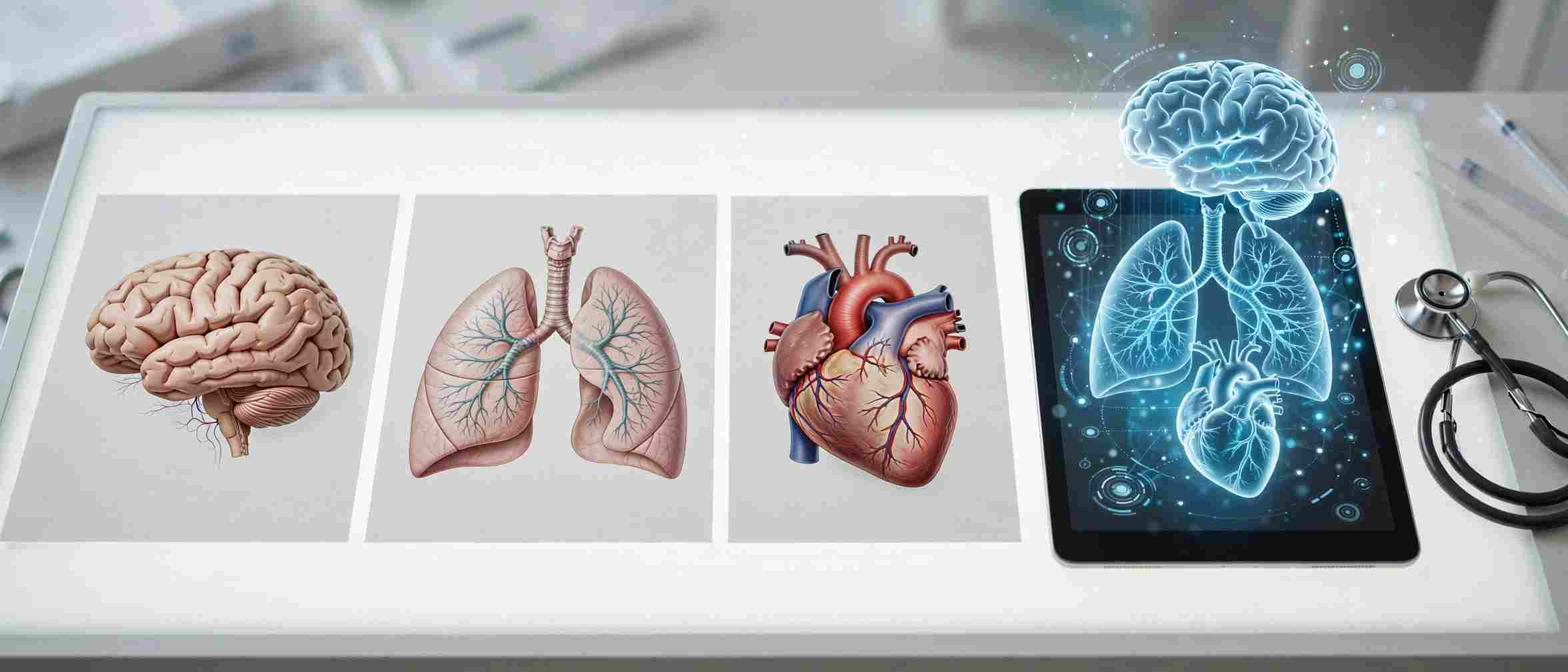
The evidence is clear:
- Patients who understand their care do better.
- Visuals help patients understand.
- Medical illustration saves lives.
As technology continues to evolve from AI-personalized illustrations to AR-powered anatomy apps the core principle remains the same: a picture really is worth a thousand words, especially when that picture helps a patient understand, accept, and act on a life-changing diagnosis.
Key Takeaways
- Medical illustration for patient education transforms complex medical information into clear, accessible visuals designed for non-medical audiences
- The U.S. faces a serious health literacy crisis – visual education materials are a proven solution
- Types of medical illustrations include anatomical, procedural, surgical, pathological, and animated/interactive formats
- Benefits span patients, providers, and health systems – from reduced anxiety to better medication adherence and fewer readmissions
- Effective medical illustrations are created by certified professionals in collaboration with clinical teams and are tested with patient audiences
- Diversity, representation, and cultural sensitivity are non-negotiable elements of high-quality patient education illustration
- The future of the field includes AI personalization, AR/VR patient experiences, and deep integration with telehealth and EHR platforms