
Informed consent illustration is the use of accurate, procedure-specific medical visuals (anatomical diagrams, stepwise procedural sequences, risk and benefit graphics, and 3D renders) embedded in consent materials to raise patient comprehension, recall, and shared decision-making quality beyond what text-only forms achieve. By pairing plain-language disclosure with dual-coded visual explanation, informed consent illustration reduces cognitive load, supports teach-back verification, and strengthens the documentation that a patient truly understood the nature, risks, benefits, and alternatives of a proposed intervention. Healthcare organizations, device manufacturers, and research sponsors increasingly treat it as a core component of ethical, defensible, and patient-centered consent.


Many consent programs still depend on dense paragraphs that patients sign without fully grasping. Specialized teams that deliver custom medical illustration and 3D anatomical visualization close that gap by translating clinical language into visuals a worried patient can follow in minutes. This guide explains how the approach works, where it adds the most value, and how to build consent visuals that are accurate, accessible, and measurable.
Quick Answer: What Should You Know About Informed Consent Illustration?

Here is the short version for readers who want the essentials first:
- Definition: Informed consent illustration pairs consent text with clinically accurate visuals that explain a procedure, its risks, and its alternatives.
- Main benefit: Patients understand and remember more when words and images work together.
- Best use cases: Surgery, minimally invasive procedures, oncology, implantable devices, anesthesia, and clinical trials.
- Core process: Define the learning goals, draft the clinical content, design the visuals, test with real patients, then version and audit.
- Key risk to avoid: Decorative or inaccurate images that mislead rather than clarify.
- Measure success with: Teach-back accuracy, comprehension quiz scores, patient questions, and consent-related complaints.
What is Informed Consent Illustration?
Informed consent illustration is the practice of using purpose-built visuals to communicate the information a patient needs before agreeing to a procedure, treatment, or research study. The visuals sit inside or alongside the consent form, patient handout, tablet module, or bedside conversation. They do not replace the clinician’s explanation. Instead, they make that explanation concrete.
A strong consent visual answers the questions patients rarely know how to ask. What exactly will happen to my body? What could go wrong, and how likely is it? What are my other options? What happens if I do nothing?

Core Components of an Informed Consent Illustration
Most effective consent visuals include a combination of these elements:
- Anatomical context: A simplified, accurate view of the organ, joint, or system involved.
- Procedural sequence: Numbered panels that show what happens before, during, and after the intervention.
- Risk and benefit graphics: Icon arrays or simple charts that express probabilities in a way patients can compare.
- Alternatives: Side-by-side visuals of other treatment paths, including watchful waiting.
- Recovery expectations: Timelines that show what normal healing looks like and when to call the care team.
How It Differs From General Patient Education
Patient education explains a condition or a healthy behavior. Consent visuals carry a heavier burden. They must support a specific, voluntary decision. As a result, they require tighter clinical review, clearer language, and stronger version control. If you want the broader foundation, our guide to medical illustration for patient education covers how visuals support health literacy across the care journey.
Why Text-Only Consent Often Fails Patients
Consent is supposed to be a process, not a signature. Yet many patients meet it as a stack of pages handed over minutes before a procedure. Under those conditions, even highly educated readers struggle.

The Health Literacy Gap
Consent forms often use legal and clinical vocabulary that sits well above a typical reading level. Terms like “laparoscopic,” “anastomosis,” or “intraoperative complications” mean little to most people. Consequently, patients nod, sign, and leave with a partial picture.
The U.S. Agency for Healthcare Research and Quality promotes the teach-back method precisely because clinicians cannot assume that a patient understood an explanation. Visuals give teach-back something concrete to point to.
Stress Shrinks Working Memory
Patients facing surgery or a cancer diagnosis are anxious. Anxiety narrows attention and reduces the amount of information a person can hold. Therefore, a long paragraph of risks competes with fear, and fear usually wins.
A simple diagram removes some of that load. The patient can see the structure involved instead of imagining it from an unfamiliar word.
The Ethical and Legal Stakes
Consent obligations are not optional extras. Federal research regulations, such as those summarized in HHS human subjects protections under 45 CFR 46, require that information be presented in language understandable to the participant. Clinical practice carries parallel ethical and legal expectations.
In practice, a signed form proves that a document was signed. It does not prove that comprehension occurred. Visuals, combined with documented teach-back, create a stronger record of genuine understanding.
How Informed Consent Illustration Improves Patient Comprehension
Visuals work because of how people process information. Several well-established principles explain why informed consent illustration performs better than text alone.

Dual Coding: Words and Images Reinforce Each Other
Cognitive science describes dual coding as the idea that people store verbal and visual information in separate but connected channels. When a patient reads a risk statement and sees a matching diagram, both channels encode the idea. Later, either cue can trigger recall.
This effect is especially useful for spatial concepts. Explaining where an incision goes or which nerve sits near a surgical field takes many sentences in text. A single labeled image does it at a glance.
Reduced Cognitive Load
Well-designed visuals chunk information. Instead of reading a ten-line procedural paragraph, a patient follows four numbered panels. Each panel carries one idea. As a result, working memory handles the content more easily.
Better Conversations and Shared Decision-Making
Visuals change the clinical conversation. Patients ask better questions when they can point at something. Clinicians, in turn, can check understanding by asking the patient to explain the diagram back in their own words.
That interaction sits at the heart of shared decision-making. The patient is no longer a passive recipient of a script. They are an active participant who can weigh options.
Improved Recall After the Appointment
Patients often leave the clinic and forget half of what they heard. A take-home visual summary extends the conversation. Family members can review it, and the patient can return to it before the procedure.
Text-Only vs. Illustrated Consent: A Quick Comparison
| Factor | Text-Only Consent | Informed Consent Illustration |
|---|---|---|
| Comprehension of procedure steps | Depends on reading level and attention | Supported by sequential visuals |
| Understanding of risk | Probabilities buried in paragraphs | Icon arrays and simple charts make odds visible |
| Patient engagement | Often passive | Encourages questions and teach-back |
| Recall after the visit | Limited | Stronger with take-home visual summary |
| Language and literacy barriers | High impact | Reduced through universal visual cues |
| Documentation of understanding | Signature only | Signature plus teach-back and visual reference |
| Production effort | Low | Moderate, but reusable across patients |
Types of Visuals Used in Informed Consent Materials
Not every procedure needs the same visual format. The right choice depends on complexity, audience, and delivery channel.
Anatomical Diagrams
Anatomical diagrams show the region of the body involved. Good ones simplify. They remove distracting detail and highlight the structures that matter for the decision.
For example, a knee replacement consent visual does not need every ligament. It needs the joint surfaces, the implant position, and the area of bone removal.
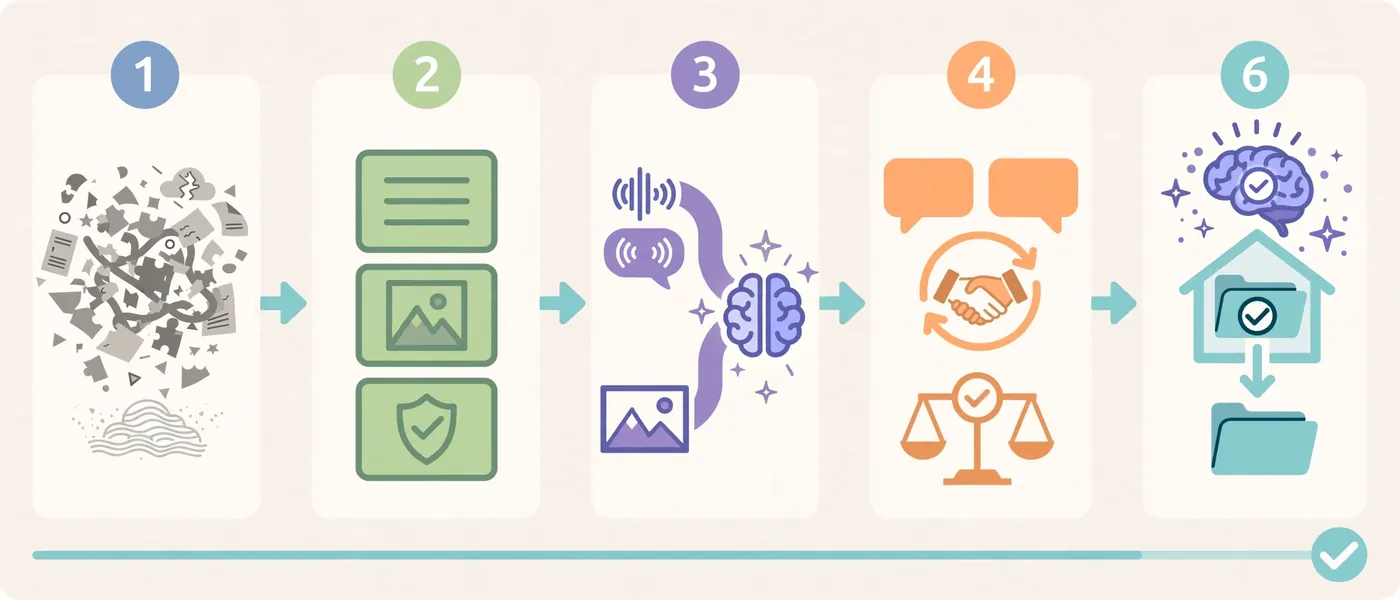
Procedural Sequence Illustrations
Sequential panels walk patients through what happens. Typically, they cover preparation, the main intervention, closure, and recovery. Numbered steps help patients picture the timeline.
Minimally invasive care benefits greatly from this format, because patients rarely understand what happens through small ports and cameras. Our resource on laparoscopic and robotic procedure diagrams shows how stepwise visuals clarify those approaches.
Risk and Benefit Visualizations
Numbers confuse many people. Percentages like “2%” or “1 in 50” do not always register emotionally or logically. Icon arrays, which show 100 small figures with a few highlighted, make probabilities easier to grasp.
Good risk visuals follow a few rules:
- Use the same denominator for each comparison.
- Show both the chance of harm and the chance of benefit.
- Avoid color schemes that imply a verdict before the patient decides.
- Pair every chart with one sentence in plain language.
Three-Dimensional Renders
Complex anatomy often benefits from depth. Three-dimensional anatomical models allow patients to see how structures relate in space, which matters for spinal, cardiac, and neurosurgical procedures. Rendered stills can be embedded in forms, while interactive versions work well on tablets.
Animation and Interactive Modules
Motion explains processes that unfold over time, such as how a stent expands or how radiation targets a tumor. However, animation costs more and requires careful versioning. Before committing, review when animation is the better format compared with static illustration.
Format Comparison Table
| Visual Format | Best For | Strengths | Limitations |
|---|---|---|---|
| Anatomical diagram | Orienting the patient to the body area | Fast to produce, easy to print | Limited sense of process |
| Procedural sequence | Surgical and interventional steps | Clear timeline, strong teach-back tool | Needs clinical review for every step |
| Icon array / risk chart | Communicating probabilities | Makes statistics tangible | Requires accurate source data |
| 3D render (still) | Complex spatial anatomy | Realistic depth and relationships | Higher production effort |
| Animation | Dynamic processes and device function | Shows motion and sequence | Costly to update and distribute |
| Interactive tablet module | Self-paced learning with checks | Embedded quizzes and tracking | Requires tech support and testing |
Where Informed Consent Illustration Delivers the Most Value
Some specialties gain more than others. The common thread is complexity, irreversibility, or unfamiliar anatomy.
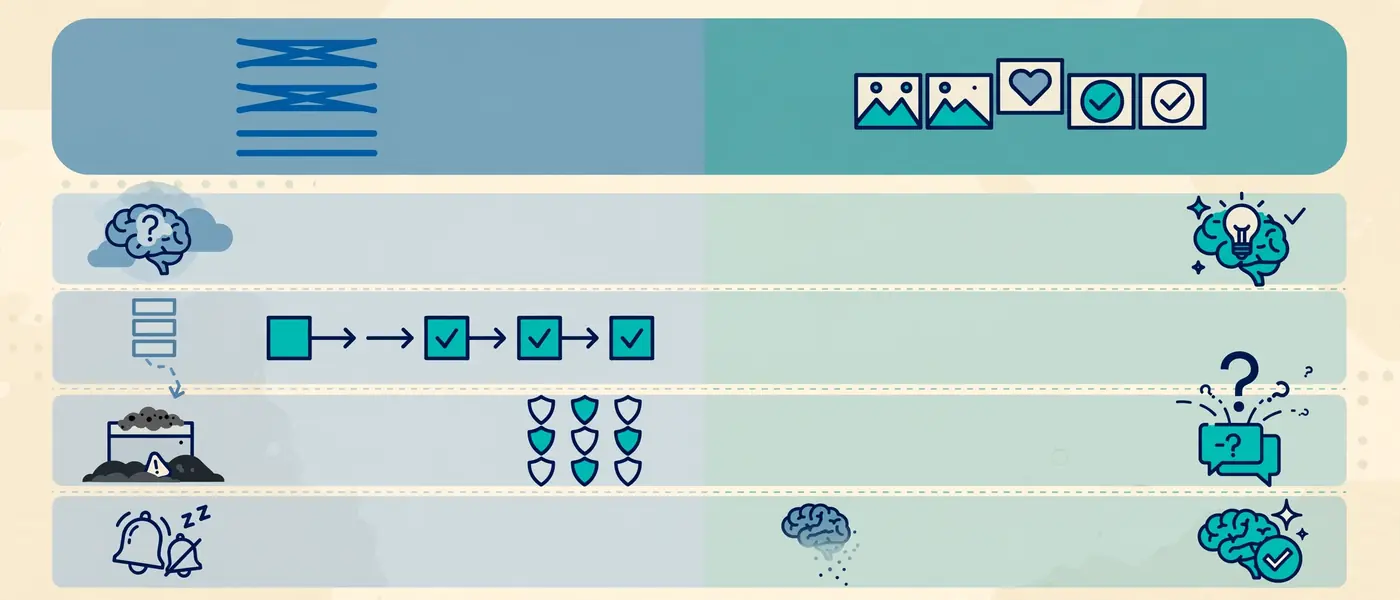
Surgery and Interventional Procedures
Surgery involves the highest consent stakes. Patients need to understand the approach, the expected result, and the realistic complications. Visuals of incision locations, tissue handling, and recovery milestones reduce surprises.
Oncology and Radiation Treatment
Cancer care has many moving parts: surgery, chemotherapy, radiation, immunotherapy, and sequencing between them. A visual treatment map helps patients see how the pieces fit together. It also supports conversations about side effects and quality of life.
Implantable Devices and Medical Products
Pacemakers, joint implants, neurostimulators, and insulin pumps all require patients to accept a device that will live in or on the body. Illustrations show where the device sits, how it functions, and what maintenance it needs. Manufacturers can also reuse these assets in labeling and training. For a related use case, see our overview of medical device illustration work for product communication.
Anesthesia and Sedation
Patients frequently fear anesthesia more than the procedure itself. A simple visual that explains monitoring, airway management, and wake-up expectations can lower anxiety and clarify risks.
Dental, Orthopedic, and Cosmetic Procedures
Elective procedures require especially clear expectations. Before-and-after pathway visuals, healing timelines, and limitation diagrams prevent disappointment and disputes.
Clinical Trials and Research Consent
Research consent must explain randomization, placebo use, visit schedules, and potential unknowns. These concepts are abstract. Flow diagrams showing study arms and visit timelines make them far easier to follow.
The FDA’s informed consent guidance for clinical investigators and IRBs outlines the information that must be conveyed to participants. Visuals can support that disclosure, provided the IRB reviews and approves them along with the rest of the consent materials.
Step-by-Step: How to Develop an Informed Consent Illustration
A repeatable workflow protects accuracy and speeds up production. Here is a practical process that mirrors how specialist medical illustration teams approach consent projects.

Step 1: Define the Decision and the Audience
Start by naming the exact decision the patient faces. Then describe the audience: age range, reading level, languages, and typical anxiety level.
Write down three to five learning goals. For example:
- The patient can describe what will happen during the procedure.
- The patient can name the two most significant risks.
- The patient can state at least one alternative.
- The patient knows when to call the care team after discharge.
Step 2: Gather Clinical Source Material
Collect the current consent text, surgical technique notes, peer-reviewed risk data, and any institutional policies. The illustrator works from verified clinical sources, not assumptions.
Ask the clinical lead to flag the details that must appear and the ones that can safely be omitted.
Step 3: Write Plain-Language Captions First
Visuals should not carry the full burden. Draft concise captions at roughly a sixth to eighth grade reading level. Then plan the image around each caption.
This text-first approach keeps the visual and verbal message aligned.
Step 4: Sketch and Storyboard
The illustrator creates rough sketches or storyboards. At this stage, changes are cheap. Clinicians check anatomy, sequence, and emphasis before anyone invests in finished artwork.
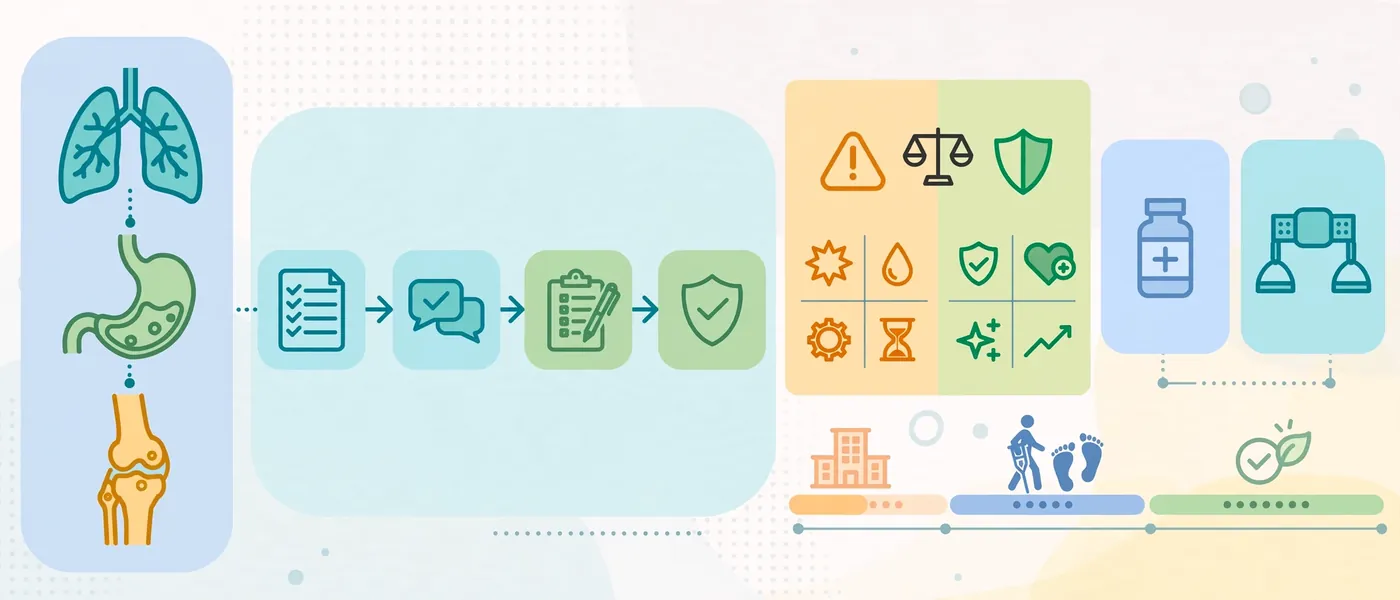
Step 5: Produce the Final Illustrations
Once the storyboard is approved, the illustrator builds the final artwork. Depending on the project, that may involve vector illustration, 3D modeling, or hybrid techniques. Delivering print-ready and screen-ready formats helps teams reuse the assets. Our guide to 3D medical illustration software explains the tools behind these workflows.
Step 6: Test With Real Patients
This step separates good consent materials from merely attractive ones. Show the draft to a small group of patients or community members. Ask them to explain the procedure back to you. Note where they hesitate or misread.
Even five to eight short sessions reveal most major problems.
Step 7: Obtain Clinical, Legal, and Ethics Approval
Route the final package through the required reviewers. For research, that includes the IRB. For clinical practice, it usually includes compliance, legal, and the department chair.
Step 8: Deploy, Version, and Audit
Publish the approved version with a clear version number and date. Retire older versions. Review the materials on a set schedule, and update them when techniques, devices, or risk data change.
Workflow Summary Table
| Step | Primary Owner | Key Output |
|---|---|---|
| 1. Define decision and audience | Clinical lead and project manager | Learning goals |
| 2. Gather source material | Clinical lead | Verified content package |
| 3. Draft captions | Writer or clinician | Plain-language text |
| 4. Storyboard | Medical illustrator | Approved sketches |
| 5. Final artwork | Medical illustrator | Print and digital assets |
| 6. Patient testing | Quality or patient experience team | Revision notes |
| 7. Formal approval | Legal, compliance, IRB | Signed-off materials |
| 8. Deploy and audit | Operations team | Versioned library |
Run a small pilot first. Compare outcomes between patients who received the illustrated materials and those who received the standard form. Even a modest, well-documented pilot gives leadership evidence to expand.
In-House vs. Outsourced Informed Consent Illustration
Organizations often ask whether to build visuals internally or work with a specialist. Both models can succeed, depending on volume and complexity.
| Consideration | In-House Team | Specialist Medical Illustration Partner |
|---|---|---|
| Upfront cost | Higher (salaries, software, training) | Project-based, scalable |
| Medical accuracy expertise | Varies by hire | Dedicated anatomy and clinical training |
| Speed for large projects | Limited by capacity | Flexible capacity |
| Style consistency | Strong if well managed | Strong with defined style guide |
| Specialty coverage | Narrow | Broad across specialties and formats |
| File formats and delivery | Depends on tools | Print, web, and 3D formats provided |
| Best fit | Large health systems with constant demand | Hospitals, device makers, and research groups with varied needs |
Many organizations choose a hybrid. They keep a small internal team for routine updates and engage specialists for complex procedures, trial materials, and device launches.
What to Look for in a Partner
When evaluating providers, ask these questions:
- Do illustrators have formal medical or scientific training?
- Can they show procedure-specific work, not just generic anatomy?
- Do they offer a clinician review step in their workflow?
- Will they deliver editable source files and multiple formats?
- Do they understand regulatory and IRB timelines?
Frequently Asked Questions About Informed Consent Illustration
What is informed consent illustration?
Informed consent illustration is the use of accurate medical visuals, such as anatomical diagrams, procedural sequences, and risk graphics, to help patients understand a proposed procedure or study before they agree. It supports the written form and the clinician's explanation rather than replacing either.
Does informed consent illustration really improve patient comprehension?
Yes, in many settings. Visuals reduce cognitive load and reinforce verbal information through dual coding. They also make teach-back easier. Results vary by design quality, so test materials with real patients and track comprehension.
Which procedures benefit most from consent visuals?
Surgery, minimally invasive interventions, oncology treatment plans, implantable devices, anesthesia, and clinical trials benefit the most. In general, any decision that involves unfamiliar anatomy, multiple steps, or significant risk gains from a visual explanation.
Can an illustration replace the clinician's consent discussion?
No. Visuals are tools that support a conversation. Informed consent remains a process between the patient and the care team. Illustrations help structure that dialogue and document understanding, but they cannot stand alone.
Do consent illustrations need regulatory or IRB approval?
For research, visuals shown to participants usually need IRB review and approval along with the consent form. In clinical care, internal policies typically require clinical, legal, and compliance sign-off. Always follow your institution's rules and applicable regulations.
How much does informed consent illustration cost?
Cost depends on complexity, format, and volume. A simple anatomical diagram costs far less than a full 3D animation. Reusable modular assets lower the per-procedure cost over time. Requesting a scoped quote from a specialist is the best way to get accurate pricing.
How long does it take to produce consent visuals?
Simple illustrations may take a few weeks, including clinical review. Complex 3D or multi-procedure projects take longer. Plan extra time for patient testing and formal approvals so that those steps do not delay launch.
What file formats should I request?
Ask for print-ready PDFs, web-optimized images, and editable vector source files. For 3D projects, request still renders and, where appropriate, interactive or animation exports. Editable formats make future updates much easier.
Conclusion: Make Informed Consent Illustration a Standard of Care
Consent works only when patients truly understand what they are agreeing to. Text alone rarely achieves that goal, especially for anxious patients facing complex decisions. Informed consent illustration fills the gap by combining clear language, accurate visuals, and documented teach-back into one coherent experience.

To recap the essentials:
- Start with the patient's decision and learning goals.
- Keep every visual accurate, neutral, and accessible.
- Test with real patients before you publish.
- Control versions and keep an audit trail.
- Measure comprehension, not just signatures.
Healthcare organizations, device manufacturers, and research sponsors that invest in this approach build trust, reduce confusion, and strengthen their compliance posture. If you are ready to improve comprehension in your own materials, commission procedure-specific consent visuals from a specialist medical illustration team and turn your next consent form into a tool patients can actually understand.